On this page
| Product | Vet rating | Key details | Best for | Pros & cons |
|---|---|---|---|---|
| Single-herb Boswellia chew Herbal mobility brand | 8/10 | single-herb Boswellia format Boops does not offer | herbal-only trial |
|
| Boops Pets Advanced Hip & Joint Boops Pets | 8/10 | Glucosamine HCl 1000 mg, MSM 500 mg, Chondroitin 250 mg, Green Lipped Mussel 100 mg per serving | daily base support |
|
| Single-herb Devil's Claw chew Herbal mobility brand | 6½/10 | single-herb Devil's Claw format | short supervised trials |
|
I begin with a premise some herbal lists will dispute: for most senior dogs with daily stiffness, neither Devil’s Claw nor Boswellia should be the first lever you pull.
Build the whole-body picture from the musculoskeletal exam first. Watch the rise from a down, the first 10 steps, the sit symmetry, the turn both ways. Palpate feet, carpus, elbow, shoulder, then spine, pelvis, stifle, hock. Stiffness that looks like hips often traces to sore feet, a locked lumbar segment, or extra body weight loading the front limbs.
A 9-year-old, 78-pound Labrador mix came in after two months of slow mornings in a ranch house with slick tile. She needed three tries to rise from her bed, paused 4 seconds at the bottom of five porch steps, then moved better after a short warm-up. Her owner weighed single-herb chews while the dog gained weight and skipped walks. We reset the foundation: non-slip runners, a raised bed, weight plan, and two 10-minute leash walks daily on grass before debating any herb.
Check the foundation before you pick an herb
Do this sequence for 14 days before adding anything new.
- Set footing. Lay runners on the path from bed to door to yard.
- Raise the bed. Use an orthopedic bed that lets elbows clear the floor.
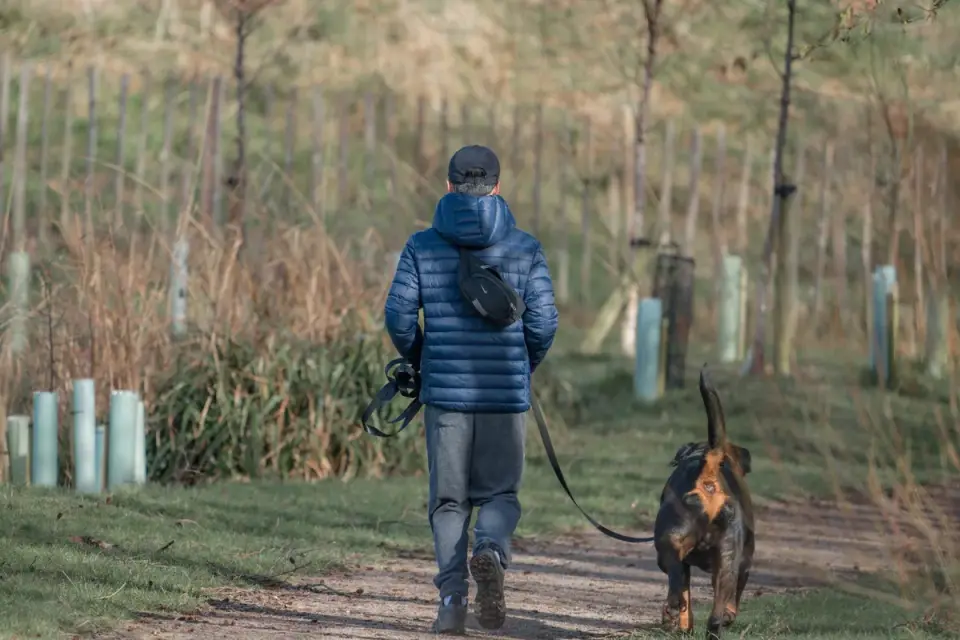
- Walk short and often. Two 10-minute sniff walks beat one 30-minute march.
- Manage load. Every extra pound drives more force through elbows, shoulders, and stifles.
- Log the rise. Time how long rising takes after naps on day 1, 7, and 14.
Supplements fit alongside movement as one part of a structure-and-function plan. Say joint stiffness and mobility support, never a medical claim. A holistic vet looks at weight and activity first, then supports the joint — not the other way around.
Where Devil’s Claw and Boswellia actually differ
Devil’s Claw traditionally refers to Harpagophytum procumbens root, used in human herbal practice for occasional joint stiffness and comfort. National Center for Complementary and Integrative Health: Boswellia traditionally refers to Boswellia serrata resin, also used to support the body’s normal inflammatory response and help maintain comfort.
Neither herb has the same depth of canine joint data as glucosamine and chondroitin, which remain among the most recognized daily supports. If you want a daily base, a glucosamine-based formula may help support joint flexibility and mobility as part of routine care.
That distinction drives my position: choose Boswellia first when you want a traditional herbal addition for comfort alongside a solid daily base, and reserve Devil’s Claw for short, watchful trials only. Devil’s Claw tastes bitter, may upset sensitive stomachs, and fits poorly for dogs with a history of stomach irritation or those taking certain stomach- or blood-related medicines. Talk with your veterinarian before combining herbs with prescribed medicines.
A 6-year-old, 44-pound cattle-dog type tried a Devil’s Claw blend after a weekend of fetch left him creaky. The owner gave it for 12 nights straight without changing the throw-and-sprint routine or adding rugs. He ate grass on night 4, skipped breakfast on night 6, and still hesitated on the third flight of apartment stairs. We stopped the herb, cut fetch to rolling the ball on grass for 8 minutes, added core stands, and rebuilt a daily base first. The failed trial taught the real lesson: no herb steadies a joint that gets overloaded every Saturday.
My evidence-bounded pick and how to trial it safely
For a dog already moving daily, at a healthy weight, with good footing:
- Keep the daily base steady for 3 weeks. Do not stack three new products at once.
- Add only one herb at a time. Boswellia is my usual first trial for owners who want an herbal layer.
- Give with a small meal. Watch stool, appetite, and comfort for 14 days.
- Keep walks level. Avoid hill repeats and long stairs during the trial.
- Re-score the same markers: time to rise, willingness on five steps, distance before slowing.
Getting up after a nap shouldn’t be the hardest part of their day. You notice the little pause before they take the stairs now. Track it, don’t just feel it.
A 12-year-old, 58-pound hound mix with a long history of morning stiffness shows where I bend the usual advice. She lived in a two-story home, slept downstairs on cold laminate, and managed only one 0.4-mile loop before sitting down. Her stomach was sensitive, so Devil’s Claw was off the table and even Boswellia waited. We moved her bed near a warm vent, added a coat for 6 a.m. outings, split food into three smaller meals, and kept movement to three 7-minute walks for three weeks. Once appetite and stool held steady for 21 days, her veterinarian approved a slow Boswellia trial while the glucosamine base stayed constant.
Learn more about daily bases in Dog Hip and Joint Supplements: What Actually Helps and What’s Just Marketing, compare related supports in Glucosamine vs. MSM for Dog Joint Pain: What Each One Actually Does, and review fats that support overall mobility nutrition in Fish Oil EPA vs. DHA Ratio for Dogs: What Actually Supports Joints and Brain. Look for a NASC Quality Seal when you shop, which reflects independently audited facilities rather than proof of outcome.
Owner checklist for the next 14 days
- Film a rise, walk-away, and recall turn on day 1 and day 14.
- Fix slip, bed height, nail length, and weight before herbs.
- Pick one change at a time and keep the log.
- Stop any new herb that brings vomiting, diarrhea, appetite loss, or restlessness and call your veterinarian.
- Bring the log, product labels, and medicine list to the recheck.
- Consider Advanced Hip & Joint only as a steady daily base within that whole plan, not as a fix by itself.
What would change if you treated footing, weight, and short daily movement as the dose, with herbs as the garnish?
Frequently asked questions
Which should I try first, Devil's Claw or Boswellia?
I usually trial Boswellia first for owners who want an herbal layer, after footing, weight, movement, and a steady daily base are set. Reserve Devil's Claw for short veterinary-supervised trials, especially in dogs with sensitive stomachs.
How long should an herbal trial last?
Keep one herb constant for about 14 days with the same meals, walks, and base formula, and score rise time, stair willingness, and walk distance before changing anything.
When should I skip these herbs?
Skip self-directed trials when your dog takes prescribed medicines, has stomach, liver, kidney, or bleeding issues, is pregnant or nursing, or has worsening lameness, swelling, or crying out. Ask your veterinarian first.
Sources
- Boswellia — National Center for Complementary and Integrative Health
- Boops Pets Primary Supplier listing — NASC