
On this page
- The premise I want to test first: is this really a temperament breed?
- What actually predicts a good outcome with this breed
- A dog I worked with, and the lesson that stuck
- Where movement, weight, and supplements fit into the plan
- The counterargument I take seriously
- Owner checklist before you bring a Doberman home — or the day after you do
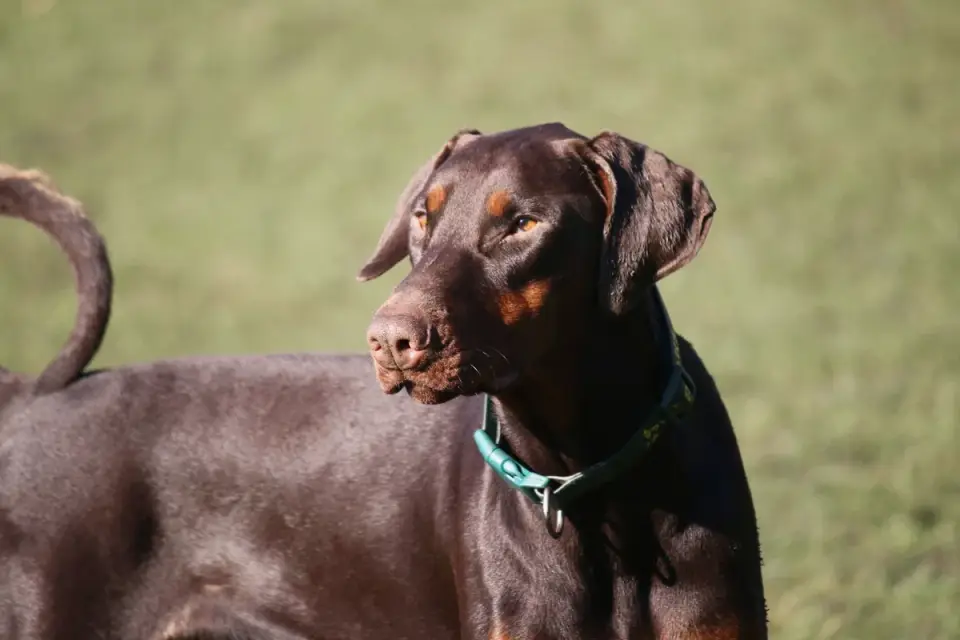
The first Doberman I worked up for a cardiac screen was a seven-year-old male named Rex, 82 pounds, still built like he could clear a fence without a running start. His owner brought him in not because Rex was limping or coughing, just because their breeder had mentioned, almost in passing, that Dobermans “have heart problems.” Rex’s echocardiogram showed early changes consistent with occult dilated cardiomyopathy — no symptoms yet, nothing the owner could have seen at home. That visit is the reason I push back on the premise most Doberman care guides open with, which is that this breed is mostly a temperament project: loyalty, protection instinct, trainability. The temperament questions matter, but they are not the thing most likely to shorten a Doberman’s life. The heart is.
The premise I want to test first: is this really a temperament breed?
Doberman Pinschers get marketed on personality — devoted, alert, biddable, a dog that reads its owner’s mood across a room. All of that is fairly accurate, and I’ll get to it. But if you ask what actually determines whether a Doberman owner is calling me in year one or year nine, the honest answer skews medical more than behavioral. Dilated cardiomyopathy (DCM) is the condition that defines Doberman ownership in a way no other single trait does. Research tracking Dobermans by age found DCM prevalence climbing from roughly 3% in dogs under two years old to over 40% in dogs past six, with a cumulative lifetime prevalence estimated around 58%, according to a study indexed on Prevalence of dilated cardiomyopathy in Doberman Pinschers in various age groups: PubMed. That is not a rare complication. That is closer to a coin flip over a normal Doberman lifespan.
I say this not to scare anyone out of the breed, but because I think care guides that lead with ear-cropping opinions and guard-dog instincts are answering the wrong question first. A Doberman owner who has that cardiac risk in their head from week one behaves differently — they screen early, they don’t dismiss a cough as “just allergies,” and they don’t wait for a fainting episode to ask for an echo.
What actually predicts a good outcome with this breed
Three things separate Doberman owners who navigate the breed’s risks well from owners who get blindsided, and none of them are exotic.
Cardiac screening on a schedule, not a symptom. Because DCM is frequently occult — meaning the heart is remodeling before any outward sign appears — waiting for a cough or collapse means you are already behind. Veterinary cardiology guidelines recommend starting yearly Holter monitoring and echocardiography around age three and continuing annually for life, since a single clear screening does not rule out disease developing later, per guidance summarized by the European Society of Veterinary Cardiology screening guidelines for dilated cardiomyopathy in Doberman Pinschers: European Society of Veterinary Cardiology.
Awareness of the breed’s bleeding tendency before it matters. Dobermans carry the highest reported incidence of von Willebrand disease of any breed — most are the milder Type I form, but it still changes how I approach any planned surgery, dental cleaning, or even a torn nail. I want a von Willebrand factor panel on file before anything elective happens, not discovered mid-procedure. Background on prevalence and inheritance comes from VCA Animal Hospitals.
Neck and spine awareness as the dog ages. Cervical vertebral instability, known informally as Wobbler syndrome, shows up disproportionately in Dobermans, typically between six and nine years old, and starts subtly — a hind-end scuff, a slightly choppy front gait, not a dramatic fall. The Doberman Pinscher Club of America describes it as a progressive compression of the cervical spinal cord that can be genetic, nutritional, or biomechanical in origin, and catching it early changes the management options available.
Underneath all three of those is a simpler daily-life pattern: structured, joint-friendly exercise instead of unstructured chaos. Dobermans are high-drive dogs, and owners often default to letting them run themselves out. I’d rather see brisk leash walks, controlled trotting on flat ground, and swimming when it’s available, especially once a dog is past middle age or has any early neck or joint findings. Explosive fetch sessions and hard stop-and-turn play are the movements I see correlate most often with soft-tissue strain in this breed — not because Dobermans are fragile, but because their drive outpaces their joints’ patience for repetitive high-impact stress.
A dog I worked with, and the lesson that stuck
A client of mine had a five-year-old female Doberman, Luna, sixty-some pounds, who’d always been the dog that beat everyone to the door. Over about six weeks one winter, the owner noticed Luna started hesitating before jumping into the car, something she’d never done before, and was slower to get up off the kitchen floor after lying down for a while. No limping, no yelping, nothing dramatic. Because the owner had heard me talk about early orthopedic changes at a prior visit, she brought it up instead of waiting to see if it resolved. On exam, Luna had mild discomfort on hip extension and reduced range of motion consistent with early hip changes. Hip dysplasia isn’t the breed’s headline condition the way DCM or Wobbler syndrome is, but Dobermans aren’t exempt from it, and OFA hip certification on breeding stock exists for exactly this reason. We adjusted Luna’s exercise to flat, controlled walks, added a joint-support routine, and watched her weight closely — mobility changes in a lean, athletic breed like this one are often the first visible sign that something orthopedic needs attention, well before an owner would call it “limping.” That case is why I now ask every Doberman owner about the couch-jump and floor-rise pattern at every single visit, not just when something looks obviously wrong.
Where movement, weight, and supplements fit into the plan
Dobermans carry very little body fat naturally, which means owners sometimes underestimate how much extra weight matters — a few pounds shows up mechanically on a lean, high-drive frame faster than it would on a stockier breed. Keeping a Doberman at a lean working weight, with ribs easily felt but not visually prominent, is one of the more controllable levers an owner has over joint and cardiac workload alike.
Structure/function joint support — glucosamine, chondroitin, omega-3 fatty acids — may help support cartilage health and comfort as part of a broader plan, but I’m careful never to present a supplement as a substitute for cardiac screening, weight management, or a properly paced exercise routine. It’s one layer, not the plan. The same logic applies to any product marketed for aging or “cellular health” in dogs; I want owners asking what specifically it targets and what evidence backs that claim, not just whether the label sounds impressive.
None of this replaces individualized veterinary guidance. It’s a starting framework, not a diagnosis for any specific dog.
The counterargument I take seriously
Some breeders and longtime Doberman owners will tell you the health risks are overstated — that with careful breeding, OFA and cardiac clearances on both parents, and modern screening, today’s Dobermans are healthier than the reputation suggests. There’s real truth in that. A dog from health-tested parents is a meaningfully different risk profile than one from an unscreened pairing, and I don’t want to flatten that distinction. But I still land on leading with the medical picture rather than downplaying it, because even well-bred Dobermans show meaningful DCM prevalence in published data, and an owner who assumes good breeding means no monitoring needed is the owner most likely to miss an occult case. Screening doesn’t stop being useful just because the parents were tested.
Owner checklist before you bring a Doberman home — or the day after you do
- Ask for OFA hip and cardiac clearances on both parents if you’re buying from a breeder, and don’t treat “clearances available” as optional paperwork.
- Schedule a baseline cardiac screening (echocardiogram, ideally with Holter monitoring) starting around age three, then repeat annually for life.
- Get a von Willebrand factor panel on file before any elective surgery, dental cleaning, or spay/neuter.
- Watch for early, subtle mobility changes — hesitation at the car, slower rising from lying down, a choppier gait — starting around age six, when Wobbler syndrome most often begins.
- Favor controlled, low-impact exercise (brisk walks, swimming, structured training) over explosive fetch and hard stop-and-turn play, especially past middle age.
- Keep the dog lean; a Doberman’s frame shows extra weight mechanically faster than many breeds.
- Treat joint supplements as one supporting layer, not a substitute for screening, weight control, or an appropriate exercise plan.
If you’re weighing a Doberman against other high-energy or working breeds, it’s worth considering training expectations in a comparably intense breed and thinking through whether your living situation actually fits a large, driven dog before committing. And if temperament differences between males and females factor into your decision, that’s worth understanding on its own terms, independent of breed.
For related context, read Male vs Female Dogs: Do Temperament Differences Matter.
For related context, read Are Doodles Actually Hypoallergenic? What the Coat Science Really Says.
Frequently asked questions
At what age should a Doberman start getting cardiac screening?
Veterinary cardiology guidelines recommend starting echocardiogram and Holter monitor screening around age three and continuing annually for life, since dilated cardiomyopathy is often occult in its early stages.
Do all Dobermans have von Willebrand disease?
Not all, but Dobermans have the highest reported incidence of von Willebrand disease among dog breeds, most commonly the milder Type I form. A blood panel can confirm status before any surgery.
What is Wobbler syndrome and how would I notice it?
Wobbler syndrome, or cervical vertebral instability, is a compression of the spinal cord in the neck that shows up in Dobermans typically between six and nine years old. Early signs are often subtle, like a scuffing hind gait or a choppy front-leg stride, rather than a dramatic collapse.
Are joint supplements enough to manage a Doberman's mobility risks?
No. Supplements like glucosamine, chondroitin, and omega-3s may help support joint comfort, but they are one part of a plan that should also include weight management, appropriate exercise, and veterinary screening.
Sources
- Prevalence of dilated cardiomyopathy in Doberman Pinschers in various age groups — PubMed
- European Society of Veterinary Cardiology screening guidelines for dilated cardiomyopathy in Doberman Pinschers — PubMed
- Von Willebrand's Disease in Dogs — VCA Animal Hospitals
- Wobblers Syndrome — Doberman Pinscher Club of America