On this page
The premise I hear most from new owners is simple: pick one of the “easy” breeds off a list and training will basically take care of itself. I want to push back on that, gently, because it sets people up to blame the dog when a routine problem shows up instead.
Border collies, golden retrievers, Labrador retrievers, German shepherds, poodles, and Shetland sheepdogs consistently top expert trainability lists, and there’s a real reason for that ranking, not just marketing. It comes largely from Stanley Coren’s survey of AKC obedience judges, which measured what he called “working intelligence” — essentially, how many repetitions a breed typically needs to learn a new command and how reliably it obeys on the first try. Golden retrievers and Labradors are frequently named among the easiest breeds because they are, as trainers describe them, eager to please and highly food- and praise-motivated. That is a real, breed-level tendency. It is not a guarantee.
In my practice, I’ve watched two puppies from the same “easy” breed end up with completely different training trajectories within six months, and the difference had almost nothing to do with genetics. One was a 9-week-old Labrador retriever puppy, about 12 pounds, whose owners started structured five-minute sessions the day they brought her home — sit, stay, and a reliable recall practiced in the kitchen before every meal. By 14 weeks she had a solid loose-leash walk on their apartment stairwell. The other was a littermate-line Labrador, same breeder, whose owners waited until she was five months old and already jumping on guests and bolting through open doors before starting any formal work. They were on their fourth month of remedial leash training when I saw them, working against habits that were already grooved in. Same breed, same “trainability,” very different outcomes because of when and how consistently the work started.
The disputed premise: does breed actually predict how easy training will be
Breed predicts tendency, not outcome. A 2010 study published in ScienceDirect: Applied Animal Behaviour Science examined whether perceived breed trainability differences reflect genuine differences in learning ability or in physical traits like size and drive, and found that a good share of what owners perceive as “trainability” is confounded with a breed’s physical build and working style, not pure learning speed. More recent genomic work backs this up from the other direction: a Genome-Wide Association Studies Reveal Neurological Genes for Dog Herding, Predation, Temperament, and Trainability Traits: genome-wide association study on herding, predation, temperament, and trainability traits identified specific neurological gene regions associated with how trainable a dog is, confirming there’s a real genetic layer here — but genetics interacts heavily with the individual dog’s upbringing, socialization, and the consistency of the handler. So the honest answer is: breed loads the dice, but it does not roll them for you.
The strongest counterargument I take seriously is the “any dog can learn” position — that method matters more than breed, so breed lists are close to irrelevant. I don’t fully agree, because some traits genuinely make daily training easier for a beginner: a dog with high food motivation and a shorter attention span for distraction is objectively less frustrating to teach basic obedience to than an independent, scent-driven breed bred to work far from a handler. But the counterargument is right about the mechanism. The research on training method itself is unambiguous here: a Efficacy of Dog Training With and Without Remote Electronic Collars vs. a Focus on Positive Reinforcement: controlled study comparing reward-based training to electronic collar training found reward-based methods were at least as effective, and often more effective, at improving recall and general obedience, while posing fewer welfare risks. If method moves the needle that much even in dogs with behavior problems, it moves the needle plenty in a beginner household with an “easy” breed. The AVSAB: American Veterinary Society of Animal Behavior has taken the same position, stating that positive reinforcement is more effective than aversive tools like electronic collars across its own reviewed research.
What actually predicts a good beginner training outcome
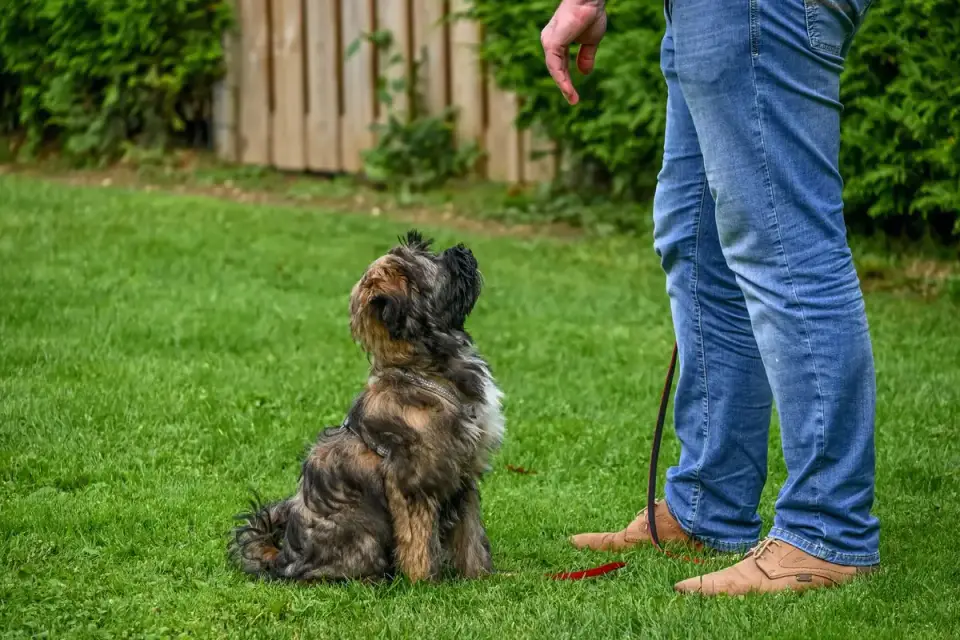
Start before the “hard” behaviors show up, not after. The gap between my two Labrador puppies came down to timing more than talent — training that starts at 8 to 10 weeks, before jumping, door-bolting, and leash-pulling become rehearsed habits, is measurably easier than remedial training at five or six months.
Keep sessions short and frequent. Five-minute sessions, three to five times a day, beat one 30-minute session for a puppy’s attention span and retention, and they fit into a beginner’s actual schedule.
Use food or toy reward consistently, on a fixed schedule at first. The trainability difference researchers describe in “easy” breeds is largely about how strongly food and praise motivate them — lean into that instead of assuming the dog should just comply.
Build one command at a time to fluency before adding a second. Sit indoors, then sit with a person walking by, then sit at the door — same command, escalating distraction, not five new commands at once.
Match exercise to the breed’s energy level before you start training, not after. A border collie or shepherd puppy that hasn’t had a real outlet for its drive will struggle to focus on a training session no matter how trainable the breed supposedly is; a tired, appropriately exercised dog of almost any breed will hold a sit longer. If you’re weighing a working breed for a small space, it’s worth reading up on what actually predicts a good fit in an apartment before you commit, because energy needs and trainability aren’t the same axis.
Protect joints while you build the routine. Repeated jumping drills, stair-sprint recall practice, and hard stops on slick kitchen floors are common in early training sessions with retrievers and shepherds, and they’re also a common source of soft-tissue strain in growing puppies. Keep training reps on grass or carpet when you’re working on recall or “come,” and save the hard surfaces for once the dog is past its major growth plates.
Where supplements fit — and where they don’t
Supplements do not train a dog, and I’m direct with owners about that upfront: nothing you put in a bowl replaces the reps, the timing, and the consistency above. Where they may help support is in older or heavier-set puppies of trainable breeds — Labradors, goldens, and German shepherds are all breeds prone to joint strain as they mature — where a joint-support supplement with glucosamine or omega-3s may help support comfortable movement during the active, jump-heavy months of basic training. That is a structure/function role, not a training shortcut, and it’s worth discussing with your own veterinarian before adding anything, especially for a puppy still growing.
A second look: what “easiest to train” should actually mean for a beginner
Near the end of a consult, I try to reframe the question for owners: instead of asking which breed is easiest to train, ask which breed’s temperament matches the amount of daily structure you can realistically provide. I had a family come in with a smart, athletic German shepherd mix they’d chosen specifically because “shepherds are easy to train” — and on paper, that’s true. But they worked long hours, the dog got one 20-minute walk a day, and by four months old she was destroying door frames and mouthing hard out of frustration, not defiance. We didn’t change the training method much; we changed the schedule, added a midday dog walker for structured play, and split her existing training time into three short sessions instead of one long one after work. Within about six weeks, the same “hard to manage” dog was holding a stay through a doorbell ring. The breed hadn’t changed. The fit between her needs and her routine had.
If you’re still deciding between a working breed and a lower-drive companion breed, it’s worth reading about what actually predicts training success in a stubborn-reputation breed like the husky — the same logic about routine over reputation applies there, just in the opposite direction. And if guarding instinct or protective temperament is part of what you’re weighing alongside trainability, understanding what a guard-dog label actually predicts is a useful gut check before you commit to a breed for the wrong reason.
Owner checklist before you start training a new dog
- Pick a breed whose energy level and independence match the daily structure you can actually provide, not just its spot on a trainability list.
- Start basic commands at 8–10 weeks, in short 5-minute sessions, several times a day.
- Use consistent food or praise reward before you introduce any correction-based tool.
- Exercise before you train, especially with higher-drive breeds like shepherds and retrievers.
- Train recall and stay on soft surfaces while your puppy is still growing.
- Ask your veterinarian before adding a joint-support supplement, and treat it as a comfort measure, not a training method.
Bottom line: breed genuinely affects how quickly a dog picks up basic obedience, but the routine you run in the first two to three months predicts the outcome more than the breed label on the shelter paperwork.
Sources
- Does perceived trainability of dog (Canis lupus familiaris) breeds reflect differences in learning or differences in physical ability? — ScienceDirect
- Genome-Wide Association Studies Reveal Neurological Genes for Dog Herding, Predation, Temperament, and Trainability Traits — PMC (NCBI)
- Efficacy of Dog Training With and Without Remote Electronic Collars vs. a Focus on Positive Reinforcement — PMC (NCBI)
- Positive Reinforcement is More Effective at Training Dogs than an Electronic Collar, Study Shows — AVSAB