
On this page
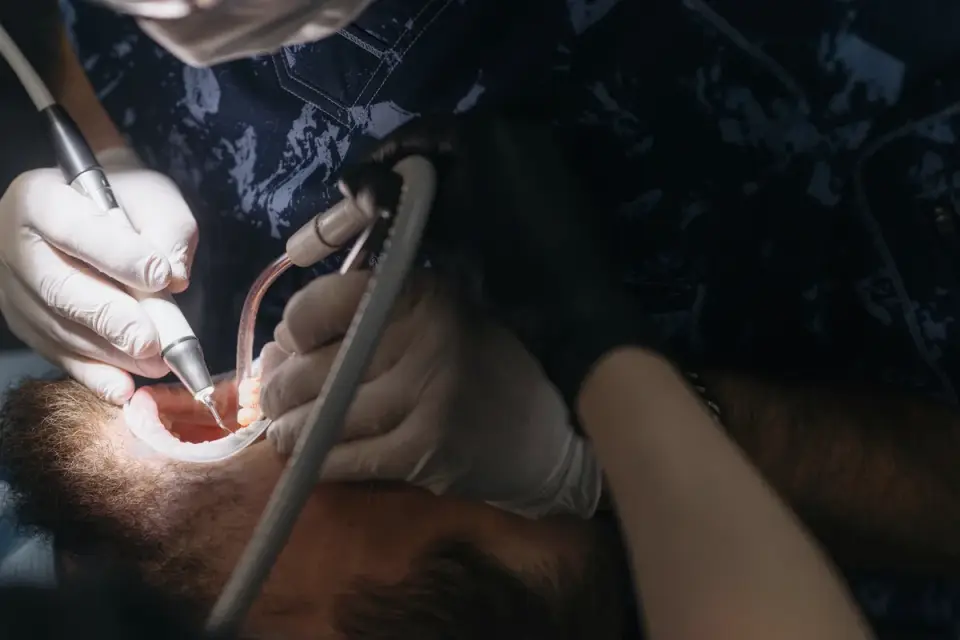
The premise I want to test first: that a toothless mouth is mainly a chewing problem. It isn’t, not primarily. Chewing loss changes ingestion speed and food texture tolerance, but the bigger downstream issue is what happens after the food is swallowed — how it’s broken down, how it moves through the gut, and whether the dog’s digestive system is getting what it needs from a diet that looks nothing like what it ate two years ago.
I’ve had this conversation more times than I can count with owners of dogs recovering from full-mouth extractions, or older dogs who’ve simply worn down or lost teeth over the years. The dog is eating again, tail wagging at the bowl, and the owner assumes the hard part is over. Often it’s just starting.
The disputed premise: is texture really the whole story
A dog with few or no teeth can still eat kibble — plenty do, softened in water for a few minutes until it breaks apart. But “can eat it” and “digests it comfortably” aren’t the same claim. Older or dental-compromised dogs frequently have concurrent changes in pancreatic and gut function, and this is where I think owners under-invest attention. If a dog’s stool is inconsistent, if there’s intermittent vomiting of undigested food, or if weight isn’t holding despite a normal appetite, the mouth isn’t the only thing that changed.
In more severe digestive cases — exocrine pancreatic insufficiency being the clearest example — the standard of care isn’t texture management at all. It’s enzyme replacement. As the veterinary literature puts it, American Veterinary Medical Association: EPI “is treated by pancreatic enzyme replacement therapy, nutritional management (low-residue diets with moderate fat content), and supplementation of cobalamin.” I’m not saying every toothless senior has EPI — most don’t — but I bring this up because it reframes the whole feeding question. Texture gets a dog to eat. Digestion is what determines whether that food actually nourishes the dog.
Building the actual meal
Start with moisture, not mush. Canned food, or dry kibble soaked in warm water or low-sodium broth for 10–15 minutes, softens without turning the meal into paste a dog can inhale too fast. I generally have owners aim for a consistency closer to thick oatmeal than soup — enough structure that the dog is still working the tongue and palate against it, which slows eating and reduces the odds of choking or regurgitation in dogs who no longer chew.
Feed smaller portions more often. Three to four smaller meals a day, instead of one or two large ones, tend to sit better in dogs whose gastric emptying and gut transit have shifted with age. I also encourage owners to feed from a slightly elevated bowl if the dog has any neck or spinal discomfort — it’s a small adjustment, but it matters for dogs that are already managing more than one age-related change at once.
Watch stool and appetite for the first two weeks of any texture change. This single sentence carries more weight than owners expect: it’s the fastest, cheapest way to catch a digestive mismatch before it becomes a weight-loss problem.
If you’re also managing a dog with a history of pancreatitis, softened food doesn’t override fat content — the label still matters more than the texture. Our guide on low-fat feeding for dogs prone to pancreatitis walks through what to actually check before switching foods.
Where fiber and gut support genuinely fit
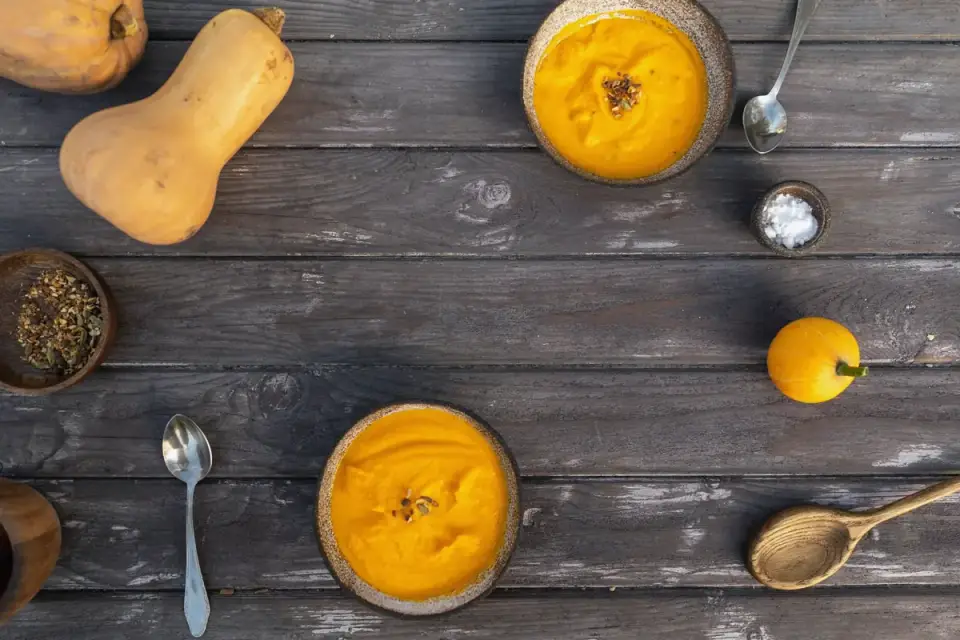
This is where I want to be careful, because it’s easy to oversell supplements to an anxious owner staring at a dog that won’t chew. What fiber and gut-support ingredients can realistically do is smooth digestion around a diet that’s already changed in texture and sometimes in fat or fiber content — not replace the underlying nutritional plan. Pumpkin is a common, low-risk example: it’s a gentle, natural source of both soluble and insoluble fiber, which can help firm loose stool or ease mild constipation in dogs whose gut motility has shifted along with their diet.
On the microbiome side, I’d caution against expecting a probiotic to be a fix-all here. A recent controlled trial in dogs found that Frontiers in Veterinary Science: diversity metrics did not distinguish non-responders from responders — meaning a more diverse gut microbiome on paper didn’t reliably predict which dogs actually improved. That’s a useful piece of evidence-grounded humility: probiotics may help support digestive comfort in some dogs, but they’re not a guaranteed lever, and they don’t substitute for getting the base diet’s texture, fat, and calorie density right first.
One dog I think about often was a 9-year-old, 62-pound Golden Retriever named Otis, about four years post-extraction of nearly all his molars from severe periodontal disease. His owner had switched him to soaked kibble immediately after surgery, which was the right move, but by the six-week mark she noticed his stool had gone soft and inconsistent, and he’d started leaving food in the bowl at dinner — something he’d never done before. What we found wasn’t a dental problem at all; it was a diet that had become too calorie-dense and too low in fiber once the kibble was diluted with water, without adjusting the base recipe. We shifted him to a food with a higher moderate-fiber profile designed to hold up when soaked, split his meals into three smaller feedings, and within about three weeks his stool had normalized and he was finishing meals again. The lesson that stuck with me from that case: the texture fix and the nutrition fix are two separate problems, and solving one doesn’t automatically solve the other.
What I’d rule out before assuming it’s “just the teeth”
Progressive weight loss on a stable diet, chronic loose stool, or food left uneaten after weeks of a texture adjustment are all reasons to loop your vet back in — not because tooth loss is dangerous by itself, but because it can mask or coincide with something that needs its own workup. Older dogs who’ve lost teeth are also, statistically, older dogs, and age brings its own list of things worth ruling out. I’d rather an owner bring up a borderline symptom too early than wait it out for another month on the assumption that soft food solved everything.
While you’re auditing the diet, it’s also worth a pass through what’s on the counter and in the treat jar — dogs with dental issues often get more “safe” soft snacks as compensation, and that’s a good moment to double check things like whether apples are being prepped appropriately (skin and seeds matter) or whether anything containing onions has quietly made its way into home-cooked additions.
The owner’s checklist
- Soften food to an oatmeal-like consistency, not a liquid, and give it 10–15 minutes to fully absorb moisture.
- Split meals into three to four smaller feedings rather than one or two large ones.
- Track stool consistency and appetite for the first two weeks after any texture change.
- Reassess fat and fiber content on the label, not just texture, especially in dogs with a pancreatitis history.
- Treat probiotic or fiber support as an add-on to a correctly built base diet, not a substitute for one.
- Call your vet promptly for weight loss, persistent loose stool, or food refusal that doesn’t resolve with texture adjustments.
Frequently asked questions
Can a dog with no teeth eat regular kibble?
Many can, if the kibble is soaked in warm water or low-sodium broth for 10–15 minutes until it softens to an oatmeal-like texture. Watch how the dog eats it and how stool responds over the following two weeks.
Is loose stool after switching to soft food normal?
A brief adjustment period can happen, but stool that stays loose or inconsistent for more than a week or two is worth mentioning to your vet — it may reflect a diet that's too calorie-dense or too low in fiber once diluted, not the tooth loss itself.
Do probiotics help dogs with digestive changes from a new diet?
They may help support digestive comfort for some dogs, but a recent controlled trial found gut microbiome diversity didn't reliably predict which dogs responded, so they shouldn't be relied on as the primary fix.
Sources
- EPI treatment overview (JAVMA) — American Veterinary Medical Association
- Diversity metrics and probiotic response in dogs — Frontiers in Veterinary Science