On this page
The premise I hear most from new Great Pyrenees owners is that this is basically a giant, fluffy Labrador — calm, biddable, easy once you get past the shedding. I push back on that every time. A Pyr is a livestock guardian dog first, and everything else about the breed, including how you should manage its growth and joints, follows from that fact.
The independent-thinking part is not a personality quirk — it’s the job. The American Kennel Club: AKC describes the breed’s character and temperament as being of the utmost importance to the standard: confident, gentle, and affectionate at home, but territorial and protective when the situation calls for it, with a demeanor of quiet composure. Historically, Pyrs guarded flocks overnight without a shepherd standing over them, which meant they had to be able to judge a threat and act on their own. That same independence shows up in a living room as a dog who doesn’t always look to you for the next move. Training has to work with that instinct, not against it — I tell owners to expect a dog who cooperates because he agrees with you, not because he’s eager to please for its own sake.
The premise I push back on, and where it actually holds up
Owners are usually right that Pyrs are calm indoors. What they underestimate is the size of the dog they’re raising and how fast that size arrives. A Great Pyrenees puppy can go from around a pound at birth to well over 80 pounds inside a single year, and giant breeds like this one continue growing — with growth plates that may not fully close — until somewhere around 18 months of age. That combination of a guardian mindset in a body still under construction is, in my experience, the actual management challenge of the breed, more than the coat or the barking ever is.
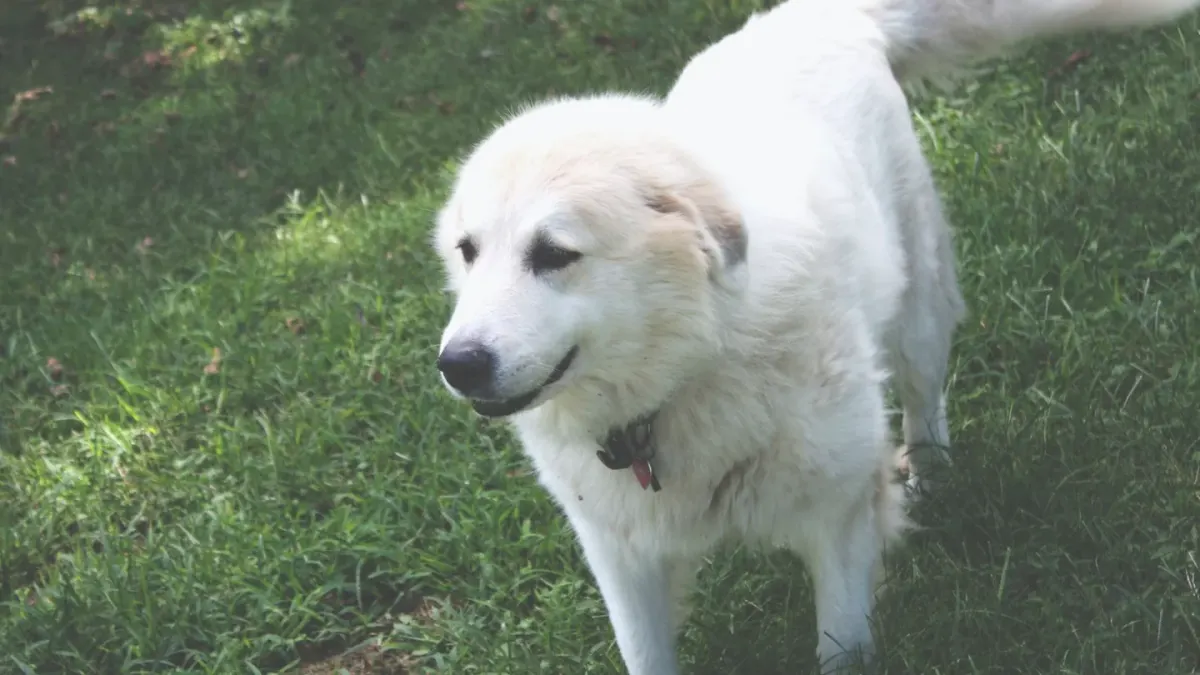
In my practice, I’ve watched this play out with a nine-month-old male Pyr named Samson, 78 pounds and still climbing, whose owners brought him in because he’d started refusing the porch stairs after his evening romp with the family’s other dog. Nothing was obviously wrong on exam — no pain on hip extension, normal gait at a walk — but his owners had let him free-run and wrestle on the concrete patio most evenings because “he has so much energy.” We talked through what was actually driving the stair refusal: soreness after repeated hard stops on a hard surface, in a joint system that was still growing. We shifted his evening play to the grass, capped hard sprint-and-stop sessions, and kept him lean rather than let him “grow into” extra weight. Within a few weeks the stair hesitation was gone. It’s one dog, not a study, but it’s the pattern I see most often in this breed’s first year.
What actually predicts a Great Pyrenees’s joint health later on
Hip dysplasia is a real concern in the breed, and genetics set the baseline — an OFA or PennHIP hip evaluation once a Pyr reaches skeletal maturity gives owners and breeders an actual structural answer rather than a guess. But genetics aren’t the only lever an owner controls. The Canine Arthritis Management resource on feeding giant-breed puppies is direct about this: overnutrition during growth drives faster bone growth and abnormal bone remodeling, independent of genetics, and a large-breed puppy should be kept at a lean, moderate body condition score throughout that growth window rather than allowed to run heavy. The Purina Institute’s data on puppy growth rates makes a related point worth repeating to owners who think a faster-growing puppy is a healthier one: rapid growth is not a sign of vigor in a giant breed, it’s a stressor on joints that haven’t finished forming.
So my actual recommendation, the one I’ll defend against the “just let him grow, he’s a big dog anyway” argument I hear from breeders and old-timers alike: feed a diet formulated for large or giant-breed puppies, keep the dog lean rather than round through the first 18 months, and hold off on repetitive high-impact exercise — structured running, jumping games, hard stop-and-start play on pavement — until the growth plates have had time to close. The counterargument I take seriously is that under-exercising a working breed creates its own behavior problems, and that’s true. The answer isn’t less activity, it’s the right kind: long leash walks, sniffing time, supervised play on grass, and free-roam time in a securely fenced yard, which also happens to suit a guardian dog’s instinct to patrol a perimeter.
Where daily structure and joint support fit together
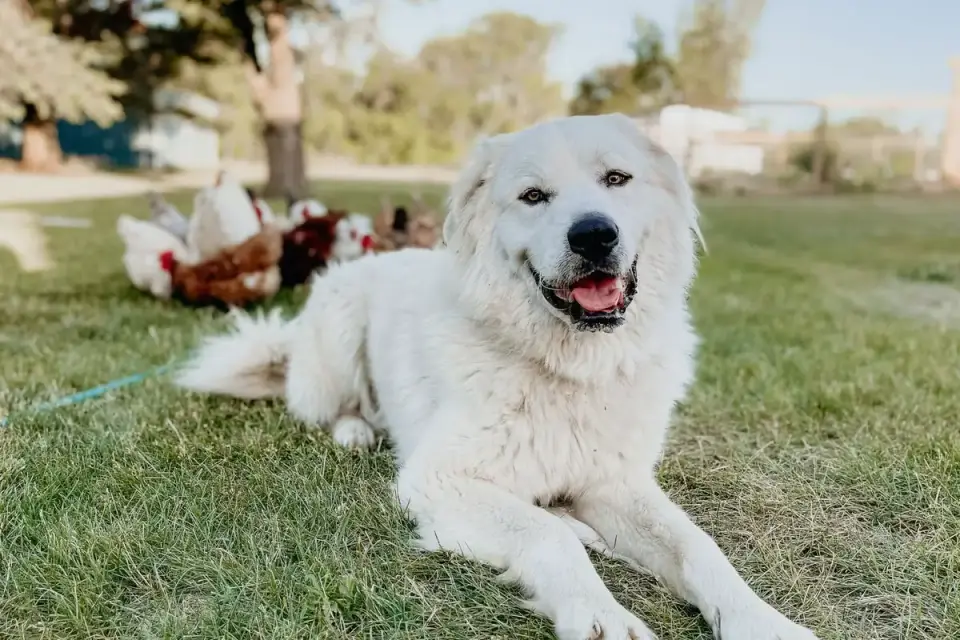
A workable weekly routine for a Pyr puppy or young adult looks like two or three unhurried leash walks a day rather than one long exhausting one, free time in a fenced yard to satisfy the patrol instinct, and consistent, positive exposure to visitors so the natural wariness toward strangers doesn’t tip into fear-based reactivity. None of that requires special equipment. What it does require is consistency, because a Pyr that’s cooped up and under-stimulated tends to find his own job — usually barking at the property line — and that’s harder to undo later than it is to prevent early.
Supplements can be a reasonable piece of this picture once a dog is past the rapid-growth window, and joint-support ingredients like glucosamine, chondroitin, and omega-3 fatty acids are commonly used to help support joint comfort and mobility in large-breed dogs — that’s structure/function language, not a promise, and it works best alongside the weight management and low-impact routine above, not as a substitute for either. I don’t reach for a supplement to fix a growth-related soreness issue; I reach for it as a maintenance layer once the skeleton is mature and the basics — weight, surface, activity type — are already right.
I think about a giant-breed rescue I worked with years back, an adult Pyr mix whose owners had done everything reasonably well — lean body condition, sensible exercise, a large-breed diet as a puppy — and who was still moving comfortably at nine years old, noticeably better than littermates from the same breeder who’d been allowed to carry extra weight through adolescence. That’s not proof of cause and effect in a single dog, but it matched what I’d expect from the growth and weight-management literature, and it’s the kind of outcome that makes the “keep them lean early” argument easy for me to keep making to new owners.
Owner checklist: raising a Great Pyrenees well
- Confirm the breed fit before you commit — a guardian mindset means independent decision-making, not disobedience, and training should work with that instinct
- Feed a large or giant-breed puppy formula and keep body condition lean, not round, through at least 18 months
- Hold off on structured running, repeated jumping, and hard stop-and-start play until growth plates have had time to close
- Default to leash walks, sniffing time, and supervised free-roam in a fenced yard over unstructured hard running
- Ask a breeder for OFA or PennHIP hip results on the parents, and plan your own dog’s evaluation once mature
- Socialize early and consistently with visitors so natural wariness doesn’t harden into fear-based guarding
- Consider joint-support ingredients as a maintenance layer once the dog is skeletally mature, not a fix for growth-stage soreness
For related breed and mobility guidance, see Best Dog Breeds for Cold Weather, Best Dog Breeds for First-Time Owners, and Are Huskies Hard to Train? for more on working with strong-willed, independent breeds.
Frequently asked questions
At what age is a Great Pyrenees considered full grown?
Great Pyrenees are a giant breed, and their growth plates may not fully close until around 18 months of age, later than most mid-sized breeds, so structured high-impact exercise is best delayed until then.
Are Great Pyrenees prone to hip dysplasia?
Genetics play a central role in hip dysplasia risk in large breeds, which is why an OFA or PennHIP hip evaluation at skeletal maturity is useful, but keeping a puppy lean and avoiding rapid overgrowth are the factors an owner can actually control.
Do Great Pyrenees need a job to be happy?
They were bred as independent-thinking livestock guardians, so structured daily walks, patrol time in a secure yard, and consistent socialization go a long way toward satisfying that instinct without letting it turn into nuisance barking.
Sources
- Great Pyrenees Dog Breed Information — American Kennel Club
- Feeding Large & Giant Breed Puppies for Joint Health — Canine Arthritis Management
- Puppy Growth Rates | Clinical Assessment — Purina Institute