
On this page
About 12% of households will send a teen to college this fall, and in bonded homes the dog often notices the empty bedroom before the parents do. I counsel families to expect a two to four week wobble in appetite, sleep, and door-watching, then build a replacement routine rather than trying to replicate the old one.
Your fast checklist if your teen just left:
- Keep wake, feed, and walk times within the same 30-minute window daily
- Reassign one high-value job the teen owned — morning walk, evening fetch, training treats
- Add 20–30 minutes of sniffing, chewing, or food-puzzle time during the old hangout hour
- Leave the bedroom door open or closed consistently, not as a daily test
- Log appetite, pacing, vocalizing, and accidents for 14 days
- Call your veterinarian if signs worsen after two weeks or the dog stops eating for 24 hours
The family’s 9-year-old beagle mix had slept under the son’s desk since puppyhood. When move-in day arrived on August 18, she waited by that closed door until 11 p.m., skipped half her dinner, and whined at every stair creak for three nights. The parents worried she was grieving like a person. I asked them to track what she still did eagerly, then transfer the son’s 6 a.m. loop around the block to mom, same route and treat pocket, to give her a predictable anchor while the house felt quieter.
My disputed premise: it is the lost schedule, not just the lost kid
Dogs form strong attachments, and a teenager is often the playmate, walker, and couch companion. Still, what unravels most dogs is the sudden loss of cues: footsteps at 3 p.m., backpack drop, leash grab, dinner-table scraps.
Rebuild structure first and emotion follows. Dogs read repetition as safety. A consistent baseline of movement, meals, rest, and low-stress handling lowers arousal far more reliably than extra sympathy or constant novelty.
That is why I prioritize transfer over replacement. Do not try to become your teenager. Take one or two rituals the dog loved and keep them recognizable — same time, same place, new person.
What the unsettled pattern tells you
Expect searching behaviors for the first week: checking rooms, waiting at windows, restlessness at the old homecoming time, clinginess, reduced play, or loose stool from stress. The ASPCA notes that true separation anxiety involves distress specifically when left alone, with vocalizing, destruction, or house soiling shortly after departure.
This distinction matters. Many college-leaving dogs are not suddenly separation-anxiety cases; they are bored, under-exercised, and under-stimulated at the exact hour they used to be busy. If you are unsure, read Boredom vs Separation Anxiety: How to Tell the Difference and track whether signs happen only in alone-time or also when you are home.
One client tried to fix door-watching with longer weekend hikes alone. Their 4-year-old shepherd mix still paced from 4 to 6 p.m. on weekdays, chewed two windowsills, and barked in three separate 10-minute bursts captured on camera. Weekends looked fine because someone was home. The failed approach was more exercise in the wrong slot. Once they moved a 25-minute sniff walk and a frozen Kong to 4 p.m. daily, pacing dropped and the chewing stopped within ten days — same total exercise, better timing.
Keep expectations preventive. Appetite may dip for a few days and sleep may shift. What should not persist is panic, injury trying to escape, or complete withdrawal.
Reassign the day in three steady moves
1. Anchor mornings and evenings. Dogs settle when the bookends hold. Keep feeding, potty, and bedtime steady. If your teen did the after-school walk, assign it to one adult for the next month, not a rotating cast.
2. Fill the hangout hour with a job. That 60–90 minutes of wrestling, fetch, or couch time needs a replacement outlet. Scatter feeding, snuffle mats, lick mats, safe chews, and short training reps work well. The Merck Veterinary Manual describes how predictable enrichment and training reduce problem behaviors rooted in arousal and learned payoff.
Short is fine.
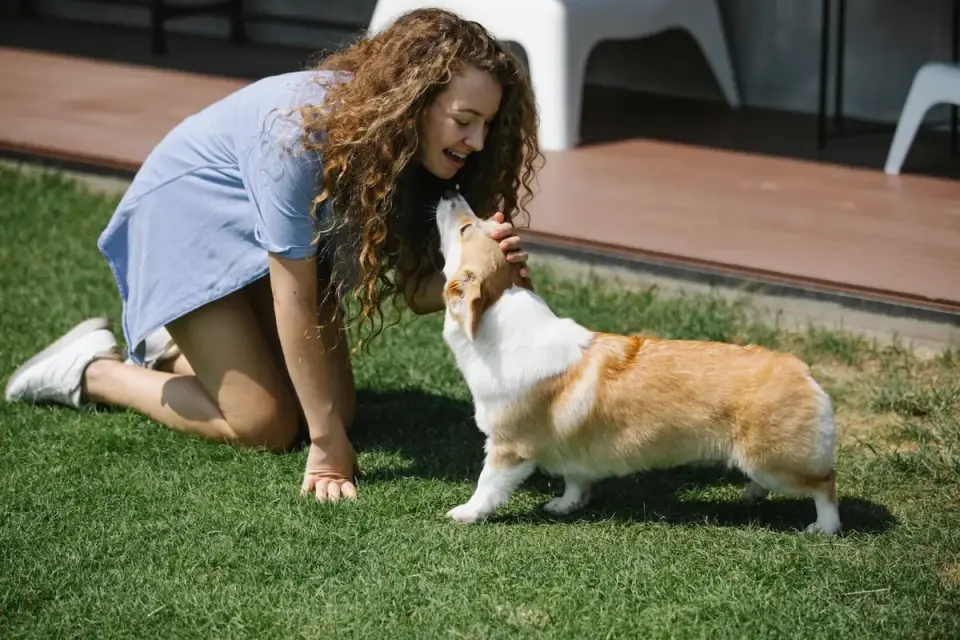
3. Keep contact with the teen boring. Video calls excite some dogs and confuse others. A short, calm hello is fine if your dog perks up and then resettles. If barking, spinning, or searching spikes afterward, switch to a worn T-shirt or recorded cue-free voice note rather than live calls. Save visits home from college for calm greetings — no marathon fetch the first night back.
For chewing that pops up during this transition, context helps: Is My Dog Chewing Out of Boredom or Anxiety? walks through how to read the pattern before you correct it.
The usual advice bends with seniors and teenagers who were the sole caregiver. A 62-pound, 11-year-old Lab in our practice had arthritis and had only ever walked with the daughter, refusing leash walks with anyone else for six days after she left. Forcing the same mile loop backfired. The family instead started with three five-minute yard strolls plus grooming on the porch bench where the daughter used to brush him, then added one neighbor dog for social confidence. By week three he accepted a shorter morning route with dad, pain-managed and tail up.
Your owner checklist to close the month
Stay within structure/function language and realistic timelines: you are supporting adjustment and daily coping, not curing an illness. Keep handling low-stress, keep weight steady with measured meals, and keep movement joint-appropriate — older dogs may need shorter, more frequent outings rather than one long make-up run.
- Same wake, walk, feed, and lights-out times for 30 days
- One transferred ritual, done by the same person
- Daily sniff, chew, or puzzle during the old teen time
- Consistent bedroom access rule and a comfortable alternative bed nearby
- 14-day log: eating, vocalizing, resting, accidents, destruction
- Recheck with your veterinarian or a credentialed trainer if signs escalate, persist beyond 2–3 weeks, or include escape attempts or self-injury
Most dogs land well once the new pattern becomes boring in a good way. You cannot replace your teen, and you do not need to — you just need to make the day make sense again.
Frequently asked questions
How long does it take a dog to adjust when a family member leaves for college?
Many dogs settle within two to four weeks once feeding, walks, and rest are consistent. If distress worsens after two weeks, or eating, sleep, or house training backslide sharply, ask your veterinarian for an exam and behavior plan.
Should my college student video-call the dog?
Try one brief call and watch what happens next. If your dog perks up then resettles, occasional calm hellos are fine. If pacing, whining, or door-searching spikes afterward, skip live calls and keep contact low-key until the routine is steady.
Is it separation anxiety or just missing my teen?
Missing a person often looks like waiting at doors, lower play, and restlessness at the old homecoming time. Separation anxiety typically starts soon after being left alone and includes vocalizing, destruction at exits, or house soiling. A 14-day log helps your veterinarian tell the difference.
Sources
- Separation Anxiety in Dogs — ASPCA
- Behavioral Problems of Dogs — Merck Veterinary Manual