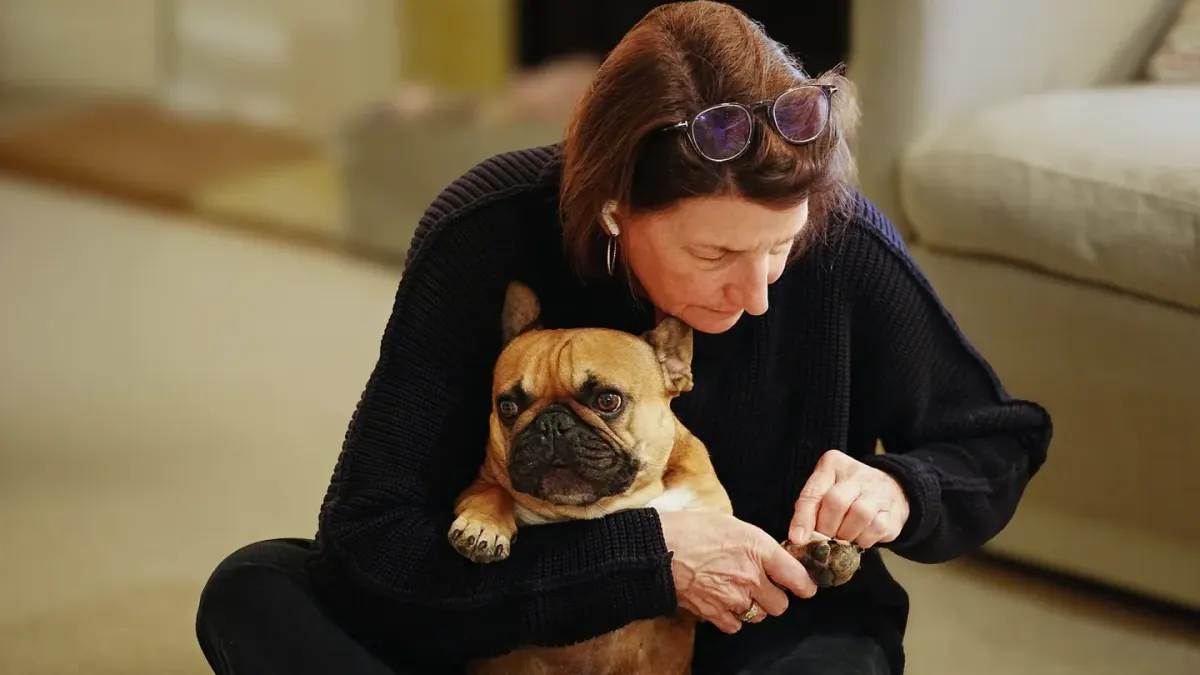
Most families worry they will drop their dog, and underneath that is a quieter worry about hurting their own back or scaring a sore, aging friend. The premise I return to in Small vs Large Senior Dogs: How Home Needs Differ is simple: lift less often, and when you must lift, keep the dog close and level rather than reaching and twisting.
That close, supported hold may help support comfort and steadiness for dogs that are stiff, tired, or recovering, without promising to fix joint disease or pain. Weight, traction, and daily movement still matter more over time than any single lift.
Decide first if this lift should happen at all
Pause before you bend. Can your dog do steps with guidance, stand with a rear-support harness, or walk a ramp into the car instead of being carried. For many senior dogs, a ramp or a non-slip path protects both of you better than strength.
The American Veterinary Medical Association notes that older pets often need adjustments in housing, footing, and handling to stay comfortable and mobile at home.
Skip a full body lift when your dog is panting, yelping, snapping, limp, post-surgical without clearance, or too heavy to hold close to your chest. Get help, use a stretcher or blanket carry with two people, or call your veterinary team for guidance.
This is also where home setup does quiet work. The comparison in Ramp or Stairs for a Dachshund With Back Problems? applies to large dogs too: ramps reduce repeated lifting, and the advice in Common Mistakes When Setting Up a Dog Recovery Space can help you lower the number of car and couch lifts in the first place.
Set your body before you touch the dog
Stand close to your dog with feet hip-width apart, one foot slightly forward. Bend your knees and hinge at the hips, keeping your back in its natural straight line. Tighten your belly gently, as if bracing for a slow breath.
Workplace lifting guidance from the National Institute for Occupational Safety and Health emphasizes keeping the load close, avoiding twisting, and lifting with the legs during smooth, controlled movements.
Keep the principles plain for a living load:
- Face the direction you will move.
- Hold the dog against your torso, not at arm’s length.
- Move your feet to turn, rather than twisting your waist.
- Lift only to waist or car-bumper height, then rest.
Your calm matters as much as your posture.
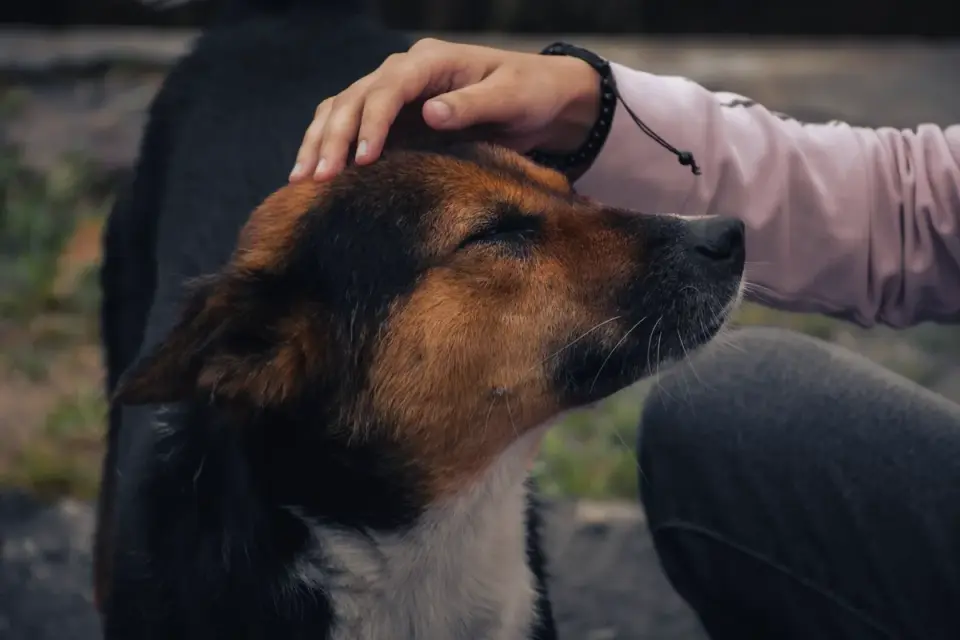
Lift close, lift level, and let the legs do the work
Ask for help for any dog over about 40 to 50 pounds, for a dog that struggles, or for stairs and tall vehicles. One person guides the front, one supports the rear, and you lift on a shared count.
For a short, planned lift with a cooperative large dog, follow this order. Keep commands soft and unhurried.
- Place one arm around the chest, just behind the front legs, with your hand on the far side of the ribcage.
- Place the other arm under the abdomen, in front of the hind legs, supporting the belly and hindquarters evenly.
- Draw the dog gently against your chest and stand by straightening your legs.
- Carry a short distance with the spine level, then lower by bending your knees again.
Do not hook under only the belly, scruff the neck, pull the legs, or lift by the collar or tail. Do not bend and twist to settle a dog into a back seat. Step into the car door space, kneel slightly, and slide the dog forward on a non-slip blanket.
For a blanket or stretcher carry, lay a sturdy blanket flat, guide the dog on in a down or standing position, then each handler grips gathered corners. Keep the dog level and move slowly.
When lifting is the wrong answer
There are days when the kindest choice is not to lift at all. A dog with sudden inability to stand, uncontrolled pain, heavy breathing, a swollen belly, or a suspected back or leg fracture should not be wrestled into position.
Support the dog where they are resting, keep them warm and still, and seek veterinary care promptly. A towel under the belly for a brief assisted stand to urinate is different from a full lift, and even that should stop if the dog cries, collapses, or resists.
Vets often see owners strain themselves trying to help after surgery or during hospice care. In practice, families do better with a written weight limit from their veterinarian, a rear-support harness fitted ahead of time, rugs on slick floors, and a plan for who to call for two-person help.
An owner checklist for safer handling
Use this before stairs, cars, and furniture for the next two weeks, then keep what reduces lifting most.
- Lower the height: ramp, ottoman step, or lower car entry.
- Add traction: runners, yoga mats, and trimmed nails.
- Stage the help: harness left on for the day if your veterinarian approves, sling by the door, phone nearby.
- Agree on roles: who takes chest, who takes hind, and what word means lift.
- Keep sessions short: assist, rest, then try again rather than forcing one long carry.
- Track comfort: appetite, sleep, willingness to walk, and any new yelp or limp to report.
Comfort is the measure, not independence or speed. Fewer, better-supported lifts will usually serve both of you longer than one heroic carry.
Frequently asked questions
How do I pick up a large dog that cannot stand?
Do not lift alone by the belly or legs. Keep the dog still and comfortable, use a level blanket carry with two people if you must move them, and contact your veterinarian promptly for guidance.
Is it better to use a ramp than to lift my senior dog into the car?
For most families, yes. A sturdy, non-slip ramp with a gentle slope reduces repeated lifting and sudden twists, and it often keeps a stiff dog calmer than being hoisted.
Where should my hands go for a short assisted lift?
One arm around the chest behind the front legs and the other under the abdomen in front of the hind legs, with the dog held close to your chest and kept level.
Sources
- Ergonomic Guidelines for Manual Material Handling — National Institute for Occupational Safety and Health
- Senior Pets — American Veterinary Medical Association