
I work from a disputed premise: your normal block already has a small gym built into it, and longer walks are rarely the way to use it. For many stiff, deconditioned dogs, three to five well-chosen curb step-ups build more usable hind-end strength than another half hour of flat trudging, because the lift briefly loads the glutes, quads, and core through a fuller range.
I see this most clearly in stocky middle-aged dogs who still want to go but fade on stairs. One bully mix I followed lagged on the last block home and needed a pause before the porch steps, with hind feet scuffing the edge on the lift. Her owner worried she needed longer walks to rebuild stamina. We kept the same short loop and added just a few deliberate curb step-ups with a short sit to reset between efforts. After 18 days of that pattern, the owner reported she carried her hind legs through the final curb without scuffing and finished the block with a level back.
Quick-check: is your dog a candidate for curb reps today?
- Sound enough to load: walks willingly on flat ground, bears weight evenly, no crying, sudden lameness, knuckling, or post-walk soreness that lasts into the next day.
- Right height: curb or step at or below hock height to start; the dog steps up, not jumps.
- Right surface: dry concrete or stone with grip, wide enough for all four feet, no crumbling edge or traffic pressure.
- Right dose: room for a few slow reps with sniff breaks, not a staircase session.
- Vet clearance if: arthritis diagnosis, neurologic signs, recent surgery, cardiac disease, or age-related frailty — ask first.
If any box fails, walk on flat ground that day. Strength work only helps when the baseline walk looks comfortable.
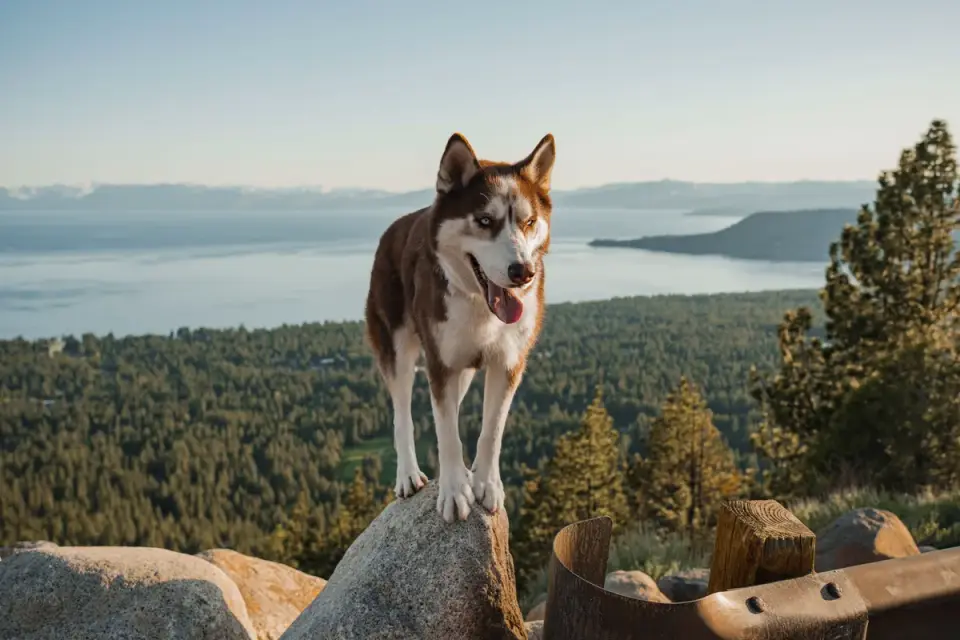
What a single curb step-up actually trains
A curb changes joint angles in a way flat walking does not. The hind legs flex more at hip and stifle to lift, then extend under load to push the body up, while the trunk muscles steady the pelvis. Done slowly, that is controlled concentric work, plus balance and body awareness on the small platform.
Small height is still strength work.
Owners often expect panting as proof. I watch for the opposite: a square sit before, a straight push without swerving, front feet placed deliberately, hind feet following without clipping. Fatigue looks like toe dragging, wide hind placement, sitting crooked, rushing, or refusing. Those are stop signs, not cues to encourage.
For context on how this fits a whole exercise picture, compare swimming versus walking for an arthritic dog and dog treadmill versus outdoor walking.
The 10-minute curb circuit I use on a normal block
Keep the leash loose and the pace unhurried. Warm up five minutes on flat ground first.
- Find one low curb. Lead straight on, not at an angle. Cue a pause, then step up. Pause with all four feet on top. Step down or walk off gently. That is one rep.
- Do a few per side. I usually start with a handful total, alternating lead sides so the push is not always from the same leg.
- Add a sit reset. Sit on the sidewalk, stand, then step up. The sit-stand recruits the same extensors through a different pattern.
- Use a low step for variety. A single broad porch step or landscape ledge works if height and footing match the curb rule.
- Close flat. Finish with easy walking and sniffing, not another hill.
The tradeoff shows up when owners turn a good tool into a workout. One lanky adolescent shepherd cross I followed had started refusing a high retaining wall his owner was using as a step, hopping off crooked with his back dipped and panting hard through the next block. The owner had stacked 15 rapid step-ups into a single outing, thinking more reps would build muscle faster. The dog got sorer, not stronger, and began balking at curbs he had handled easily. We cut back to a handful of slow square step-ups with sniff breaks between efforts, and his willingness to load the hind legs returned before his endurance did.
Where food and joint nutrition realistically fit next to reps
Movement builds the capacity; diet and body condition decide how much load every rep carries. Extra weight multiplies curb forces, so I weigh what a supplement can realistically do for diet, mobility, and recovery alongside calories, protein adequacy, and steady weight trends rather than as a substitute for them.
Owners often ask about glucosamine, chondroitin, fish oil, or green-lipped mussel in this context. I ground those questions in nutritional evidence and frame benefits as may help support normal joint structure during training, not as repair or pain relief. For quality control, I point owners to look for a NASC seal and lot-level transparency, and to read evidence summaries with the same caution urged by the National Institutes of Health when joint-support claims sound larger than the data.
If you use a product, keep dose, start date, and any change in stiffness, willingness to step up, or next-day soreness in the same log where you track reps. That record matters more than any single ingredient.
When to skip the curb and walk on
Skip reps when the dog is already tired, the ground is wet or icy, the curb is crumbling or too high, traffic forces a tight angle, or the dog shows heat, pain, neurologic wobble, or unusual fatigue. Puppies with open growth plates, very frail seniors, and post-operative dogs need a veterinarian or rehab therapist to set height and volume first.
The usual advice has to bend for the stiff senior who cannot repeat reps. One small senior terrier I followed could manage a low curb with good form, then faded if asked to repeat it, with hind legs trembling on the lift and needing help on apartment stairs afterward. Instead of drilling the same curb, we spread the work across the route, using one step-up near the start and a later low ledge near the end of a 0.4-mile flat loop, with the middle kept to easy sniffing on level ground. That spacing let her recover between efforts and still finish the route with a level topline.
For dogs that need home access changes rather than more reps, a ramp project like this DIY dog ramp build often helps more than any exercise tweak.
Your owner checklist for the next two weeks
- Warm up flat, then pick curbs at or below hock height with good grip.
- Keep reps low and slow, with sits and sniff breaks; stop at the first scuff, sway, or refusal.
- Alternate sides and keep descents controlled; never ask for a jump.
- Log reps, surface, and next-morning stiffness; progress height or count only if mornings stay easy.
- Hold weight steady, keep protein adequate, and review any joint supplement for quality and fit with your veterinarian.
- Recheck in two weeks: steadier push, less scuffing, and willingness to offer the step are winning.
Start smaller than you think. Strength on walks comes from clean lifts repeated calmly, not from sore evenings.
Frequently asked questions
How many curb reps should I start with?
Start with just a few slow step-ups inside a normal walk, with full resets between efforts. Add reps only if the next morning looks normal and form stays square.
What height is safe?
At or below hock height to start, with room for all four feet. The dog should step, not jump, and step down under control.
When should I stop the session?
Stop for toe scuffing, swerving on the push, crooked sits, rushing, refusal, panting that does not settle quickly, or any lameness.
Sources
- National Animal Supplement Council — NASC
- Office of Dietary Supplements — National Institutes of Health