On this page
- The premise I hear from prospective owners, and why I push back on it
- What actually predicts a good husky placement
- The dog that changed how I frame this conversation
- Where joint health and mobility fit into the decision
- Where I land, and the counterargument I take seriously
- Owner checklist: deciding on a husky with your real life in mind
The checklist first, because that’s what actually predicts whether this goes well:
- You can commit to 60+ minutes of real daily exercise, most days, indefinitely — not just the puppy year
- Your yard has secure, dig-proof, climb-proof fencing (or you’re prepared to never let this dog off-leash in an unfenced space)
- You’re not chasing a low-shedding or low-maintenance coat — huskies blow their undercoat twice a year
- You can tolerate a dog that may not reliably come when called, even with training
- You’ve priced out orthopedic care as a lifetime line item, not a one-time vet visit
- You want a dog that reads as independent-minded rather than eager-to-please
If more than one of those gives you pause, keep reading before you commit — the reasons matter more than the checklist itself.
The premise I hear from prospective owners, and why I push back on it
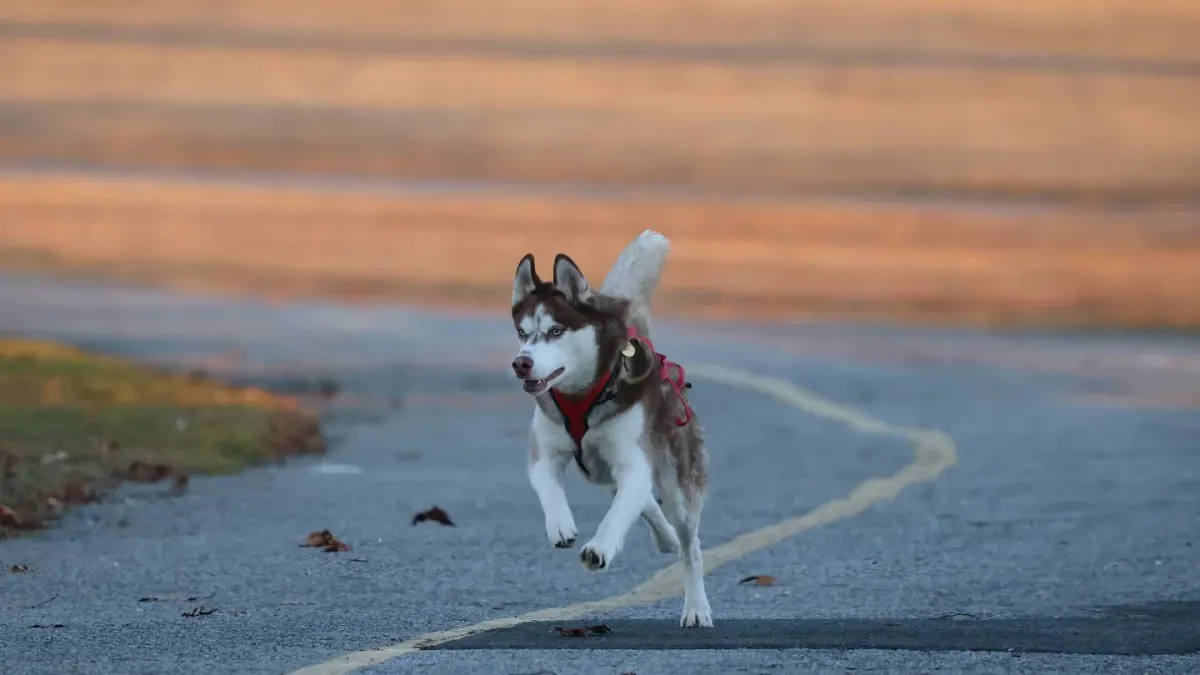
The pitch usually sounds like this: huskies are beautiful, they’re not aggressive, and they’re “medium-sized,” so how demanding could they really be? I understand the instinct. But I counsel every prospective husky owner the way I’d counsel a client sitting in my exam room with a photo of a litter on their phone — expectation first, romance second. The American Kennel Club describes the Siberian Husky as a dog “developed to work in packs, pulling light loads at moderate speeds over vast frozen expanses” — that’s not incidental breed trivia, it’s the whole temperament in one sentence. This is an endurance athlete bred for sustained daily work, not a companion breed that happens to look athletic. When owners treat the exercise line in a breed profile as a soft suggestion, that’s usually where the relationship starts to strain.
What actually predicts a good husky placement
It isn’t yard size, and it isn’t whether you’ve owned a dog before. Three things predict success far better:
Daily exercise volume, not intensity. The AKC breed description is direct on this: huskies “require daily exercise in the form of a long walk, or preferably, long jog,” and that if under-exercised, “they can be overactive and destructive” (AKC). I’ve had owners tell me a fifteen-minute yard session covers it. It doesn’t, and the dog usually tells them so — through chewed baseboards, escaped fence lines, or 2 a.m. zoomies.
Containment, not just fencing. Huskies are notorious diggers and jumpers with a strong prey drive and wandering instinct; the AKC notes they “may roam for miles if the opportunity arises” and “may not come when called.” A six-foot privacy fence with no dig barrier is not containment for this breed — it’s a suggestion.
Realistic expectations about independence. Huskies are friendly, rarely aggressive toward people, but they are not reliably biddable in the way a retriever is. If your mental model of “well-behaved” is “obeys promptly off-leash,” recalibrate before you bring one home.
The dog that changed how I frame this conversation
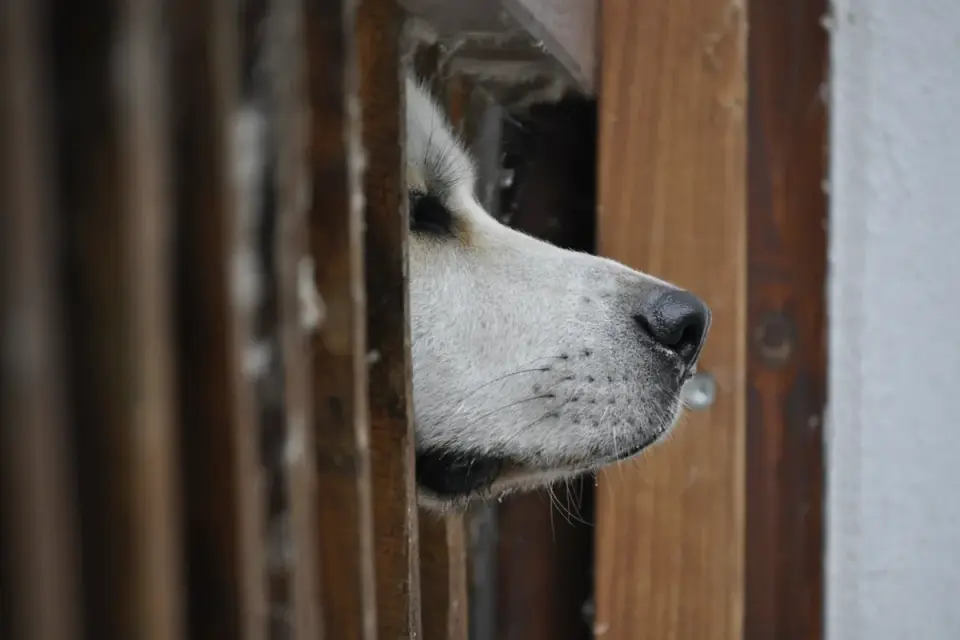
I once worked with a two-year-old husky named Koda, about 48 pounds, whose owners had moved from an apartment to a house with a large but standard-height wooden fence. Within the first month, Koda had escaped three times — twice by digging under a gate, once by scaling a woodpile stacked against the fence line. The owners were exhausted and starting to talk about rehoming. What changed things wasn’t a training class. It was a concrete dig barrier along the fence perimeter, a locking gate latch, and a shift from one evening walk to a morning jog plus an evening scent-work session in the yard. Within six weeks the escape attempts stopped and the destructive chewing at the back door — which the owners hadn’t even connected to under-exercise — resolved alongside it. That case is why I now walk containment and exercise volume through with every husky-curious owner before we talk about anything else, including training classes.
Where joint health and mobility fit into the decision
This is the part owners rarely ask about, and it’s directly relevant to a husky’s daily activity load. Hip dysplasia shows up in Siberian Huskies at a moderate rate compared to many purebred lines, and it develops during the first two years of life rather than being present at birth (VCA Animal Hospitals). The tension here is real: this is a breed that needs substantial daily activity, but both under-exercise and poorly managed over-exercise in puppyhood can stress developing joints. My practical guidance is to favor frequent, moderate sessions over one long grueling outing — short structured runs or hikes spaced through the day tend to build endurance without hammering growing joints, and weight management stays non-negotiable for the breed’s whole life. Where a joint-support supplement fits, it’s alongside this structure, not instead of it — it may help support cartilage and mobility maintenance as part of a broader plan, never as a replacement for appropriate exercise volume or a veterinary orthopedic workup if you see lameness, reluctance to jump, or a stiff gait after rest.

Where I land, and the counterargument I take seriously
My honest position: a Siberian Husky is a genuinely rewarding dog for the right household, but a poor match far more often than owners expect going in, because the breed’s core needs — daily high-volume exercise, serious containment, tolerance for independence — are non-negotiable rather than trainable away. The strongest counterargument I hear is that plenty of huskies thrive in modest suburban homes with committed owners who simply weren’t “runners” before the dog arrived, and that’s true — I’ve seen it happen, including with Koda’s family once the setup changed. But that outcome required real infrastructure changes, not just goodwill. If you’re not willing to make those changes before the dog arrives, the goodwill runs out fast. If your lifestyle already includes daily running, hiking, or a fenced, secure yard and you’re drawn to an independent-minded dog rather than a clingy one, this can be an excellent fit. If you’re hoping the dog will adapt down to a lower-activity life, it’s a harder path — for both of you.
For owners weighing a husky against other high-energy or northern breeds, it’s also worth reading about how coat type and climate tolerance interact more broadly — see Best Dog Breeds for Cold Weather for context beyond the husky specifically, and Best Dog Breeds for Apartment Living if space, not climate, is your real constraint. If trainability itself is your main hesitation, Are Huskies Hard to Train? goes deeper into what actually predicts a good training outcome with this breed.
Owner checklist: deciding on a husky with your real life in mind
- Map your actual weekly schedule against 60+ minutes of daily exercise — be honest, not aspirational
- Walk your fence line and look for dig points, low spots, and anything climbable near the perimeter
- Decide now how you’ll handle shedding season — twice-yearly heavy coat blow is not optional grooming
- Talk to your vet early about a joint-health monitoring plan, especially through the first two years
- Ask yourself whether you want a dog that works with you or one that reliably obeys you — huskies are the former
- If any of this gives you pause, meet adult huskies through a breed rescue before deciding, not just puppies
Bottom line: a husky rewards owners who build the structure first — exercise, containment, and joint-health monitoring — and asks very little forgiveness from those who don’t.
Frequently asked questions
Are Siberian Huskies good for first-time dog owners?
They can be, but only for first-time owners who are also committed to daily high-volume exercise and secure containment — the breed's independence and roaming instinct make inexperienced, low-activity homes a common source of behavioral problems.
How much exercise does a husky actually need per day?
The AKC describes a daily long walk or, preferably, a long jog as the baseline, with huskies prone to becoming overactive and destructive when under-exercised.
Sources
- Siberian Husky Dog Breed Information — American Kennel Club
- Siberian Husky — VCA Animal Hospitals