On this page
My disputed premise is this: short days should change when and how your dog moves, not whether your dog moves at all. I hear owners say winter is for rest, then spring is for catching up, and as a board-certified veterinary nutritionist with sports-medicine and rehab training, that trade worries me more than cold itself. Conditioning is lost faster than it is built, especially in older joints, and food therapy plus supplement science cannot replace the circulation, muscle tone, and joint range that regular movement maintains.
I work at the intersection of nutrition, supplement science, and acupuncture, so I weigh what a supplement can realistically do for diet, mobility, and recovery. Glucosamine, chondroitin, omega-3s, and green-lipped mussel may help support normal joint structure and day-to-day comfort alongside movement, but they do not build fitness while a dog waits on the couch. That boundary matters here because this is exercise planning, not nutrition prescribing, and your own veterinarian who knows your dog’s heart, weight, and orthopedic history should clear any new routine.
An 11-year-old chocolate Labrador I followed through last December makes the decision concrete. His owner worked until 5, sunset was near 4, and the icy sidewalk behind their building had already caused two slipped rear legs in one week. The dog was stiff for the first dozen steps each morning, then eased, and the owner worried a long dark walk would do more harm than good. We replaced one attempted 40-minute evening walk with a 12-minute daylight walk at lunch, a 10-minute indoor obstacle loop after work, and nose work on a towel, and by December 22 his morning start-up stiffness had shortened from about nine minutes to under three.
Split the day before you lengthen the walk
Daylight is your limiting nutrient in winter, so treat it like feeding. Two or three short bouts beat one long slog after dark, because muscles stay warm, footing is easier to judge, and an achy dog recovers between efforts rather than swelling up overnight.
For a healthy adult, I like a morning daylight walk for aerobic work, a midday or right-after-work skills block for strength, and a brief evening toilet loop with lights and reflective gear. The American Veterinary Medical Association reminds owners that cold tolerance varies widely by coat, size, age, and health, so watch for shivering, slowing, or lifted paws and cut the outing short rather than pushing through. That guidance lines up with rehab thinking: frequency keeps tissue happy when duration has to shrink.
If you only see daylight on weekends, put your longest walk there, then protect weekday fitness with indoor reps. That is also where comparisons like Swimming vs Walking for an Arthritic Dog: Which Actually Helps More? help owners choose low-impact substitutes when sidewalks ice over.
Make darkness safer, not exercise-free
You do not need perfect conditions, you need a repeatable dark-hours setup. Pick one well-lit loop you know by heart, wear a headlamp plus a clip light on the harness, and keep the leash short enough that you feel a slip before it becomes a split.
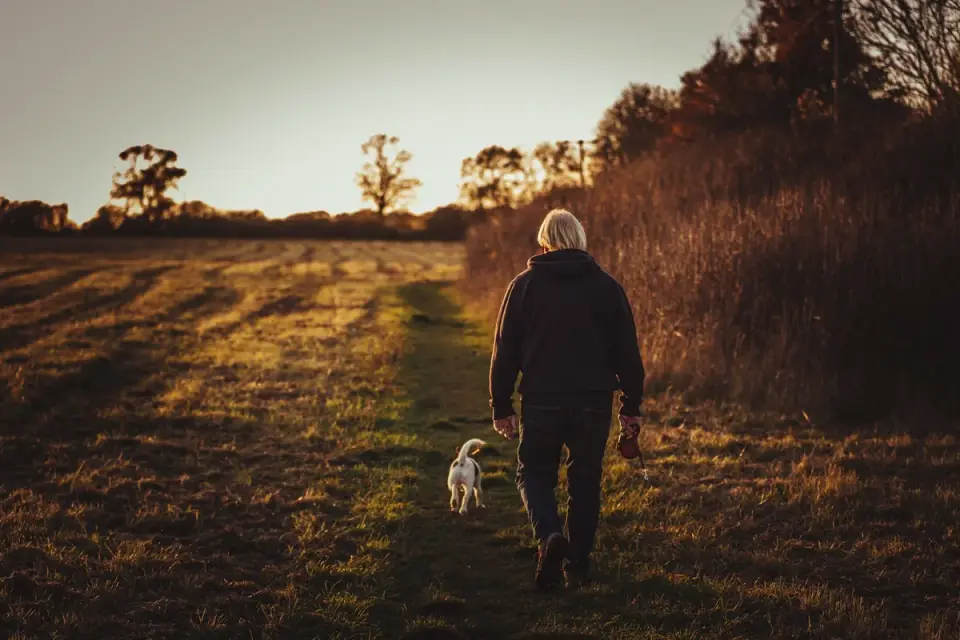
A three-year-old Boxer from a downtown apartment showed me the tradeoff the hard way. His owner tried to preserve fitness with one fast half-mile loop at 9 p.m. on salted sidewalks, hoping intensity would make up for lost daylight. After ten days the dog was licking his front paws raw, lagging on stairs, and blowing off recall he usually loved. Paw balm and wiping helped the salt, but the real fix was unglamorous: we cut that loop to a quarter-mile, added a 15-minute tug-and-search game indoors, and moved the harder cardio to Saturday morning. Readers weighing a similar high-drive breed may find Boxer Care and Exercise Needs: A Vet’s Real-World Guide useful context for matching energy to safe outlets.
Short means lit, familiar, and sane.
Build the indoor ten minutes that actually counts
Indoor work fails when it is random. It works when it follows the same warm-up, work, cool-down order you would use outside.
Start with two minutes of easy marching in place, gentle figure-eights around chairs, and three to five sit-to-stands. Then pick two strength moves: couch-cushion weight shifts, hallway cavaletti over rolled towels, or three-second stand-stays with head turns to load neck and core. Finish with sniffing or licking — scatter feeding, snuffle mat, frozen Kong — because down-regulating after work supports recovery as much as the work itself.
Keep floors grippy with runners or yoga mats. Cold muscles plus slick hardwood is how winter strains happen indoors. If your dog is new to indoor equipment, Dog Treadmill vs Outdoor Walking: Which One Actually Serves an Achy Dog Better? lays out how to introduce motorized walking without trading joint comfort for convenience.
A sceptical friend would ask here whether ten minutes indoors can possibly matter. My answer is plain: it does not replace a hike, yet it preserves the muscle that protects joints until longer days return, and preserved muscle is easier to recondition than rebuilt muscle.
Where food and joint nutrition fit without overpromising
Winter often brings weight gain because treats rise while steps fall, and extra pounds raise the cost of every step on stiff joints. I would rather you weigh meals for two weeks, score body condition with your hands on ribs, and adjust portions to hold weight steady than add any powder and hope.
That is where I ground an integrative claim in the nutritional evidence. A complete and balanced diet comes first, omega-3s and joint-support ingredients may help support normal mobility as part of a whole plan that includes movement and weight control, and no supplement makes a deconditioned dog conditioned. VCA Hospitals notes the same whole-patient link between steady weight and mobility comfort, which is why I put the food scale before the supplement jar in January.
For off-leash dogs who lose their field time to early dark, Off-Leash Play vs On-Leash Walks for Exercise: What Actually Serves a Dog’s Joints is a helpful lens on what to replace and what to keep.
The usual advice has to bend when ice, age, and a healing injury collide. One small terrier mix I advised on missed four nights of walks in a row during a freeze, then tried to bank it all on a Sunday lake trail and came home non-weight-bearing on one hind leg for an evening. We did what winter sometimes demands: no make-up miles, three days of leash-only toilet walks, indoor nose games only, and a call to the primary vet before resuming. The different choice was restraint plus a slower re-entry — five-minute flat loops, then adding five minutes every third day if the dog rose clean the next morning — rather than loyalty to the weekly mileage total.
Your short-day owner checklist through March
Check paws, belly, and nails after every outing, wash off salt, and dry between toes. Lay traction before you need it, charge lights where you see them, and keep one indoor routine written on the fridge so a tired evening does not become a skipped week. Track morning stiffness, evening energy, and weight every Sunday, and call your veterinarian promptly for new lameness, swelling, coughing in cold air, or a dog that will not warm up within a few minutes indoors. You are not chasing summer fitness now. You are carrying strength, weight, and habit forward until light returns.
Frequently asked questions
How much outdoor exercise does my dog still need when it gets dark at 4 p.m.?
Keep total weekly movement steady but split it. Most healthy adults do well with 20 to 40 minutes across two to three short bouts daily, shortened for ice, wind, age, or brachycephalic breathing, with longer walks saved for daylight you can actually see footing in.
What is the best indoor substitute for a missed winter walk?
A 10 to 15 minute warm-up, strength, and sniff sequence. Try sit-to-stands, towel cavaletti, weight shifts, then scatter feeding or puzzle toys to settle the nervous system and support recovery.
Sources
- Cold-Weather Pet Safety — American Veterinary Medical Association