Ladder walking is not about speed or fitness miles. It is about teaching your dog to think with the feet again, one rung at a time.
My disputed premise is this: for a stiff, scuffing, or wobbly dog, five minutes of deliberate foot placement does more for daily mobility than adding another block to the walk. Longer walks build endurance, but they let dogs rehearse the same shuffling pattern. A ground ladder forces a new pattern — lift, reach, place — and that pattern carries over to stairs, curbs, and slick floors.
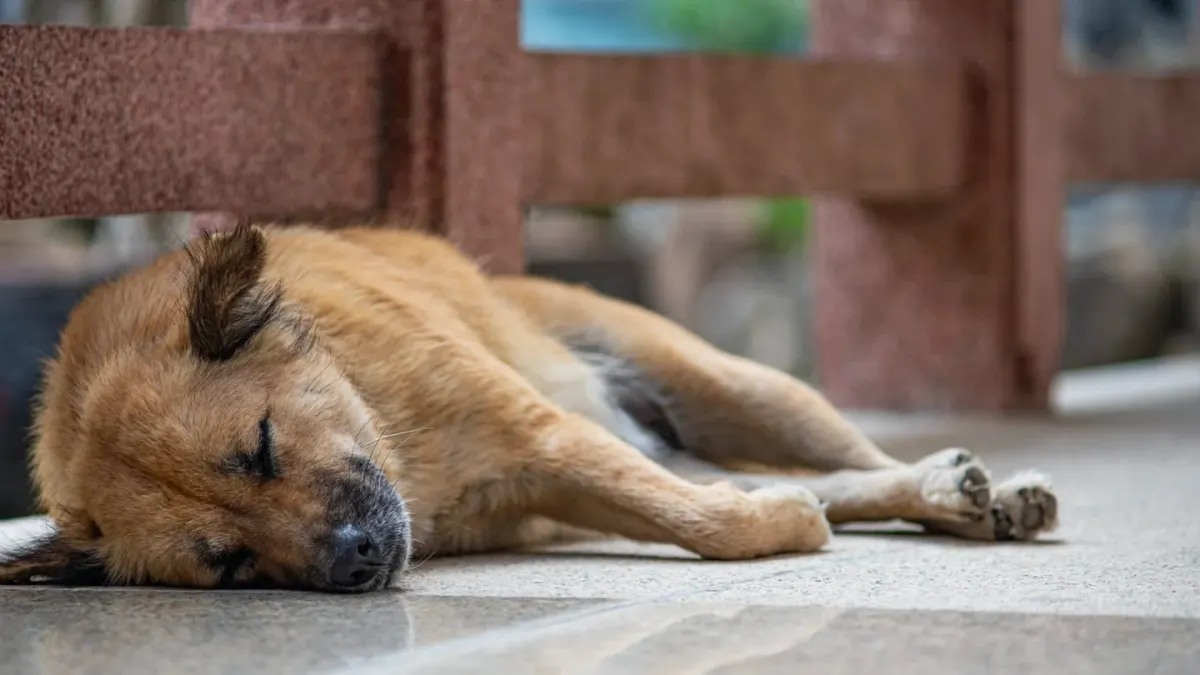
I saw that tradeoff in a home visit last spring with a rangy mixed-breed dog, about seven years old and built like a small deer, who had started catching toenails on the kitchen tile and hesitating at the two back steps. The owner was walking him 1.8 miles every morning to keep him limber, yet the scuffing was getting louder. We laid a taped ladder on the living room rug and lured three slow passes on a Tuesday evening, then repeated that for ten days. By day ten his step-over was visibly higher on the middle rungs and he stopped clipping the second back step on most exits. The total work was under four minutes a day, but it was precise work his morning miles were not giving him.
What is ladder walking really asking your dog to do?
Ladder walking borrows from human rehab and canine cavaletti work. A flat ladder on the ground creates a narrow corridor with visual rungs the dog must step over without stepping on.
That constraint does three things:
- Narrows the base of support, so the dog balances weight side to side
- Sets stride length, so short-stepping hind legs have to reach
- Adds a planning demand, so rushing dogs have to slow down and look
From a food therapy and rehab view, I weigh what movement can realistically do alongside nutrition. Joint-support ingredients such as glucosamine and chondroitin may help support structure, as discussed in a review in the Journal of Veterinary Medical Science, but they do not teach coordination. Only practice does that. Think of ladder work as skills training for joints, while diet, weight, and well-chosen supplements support the tissues doing the work.
Your 60-second setup checklist?
- Where will you lay it? Flat, non-slip surface with 8 to 10 feet of straight runway and room to turn at both ends.
- What counts as a ladder? Agility ladder, two broomsticks with painter’s tape rungs, or PVC rails. Keep rails low and flat on the floor.
- How wide and tall? Rungs 14 to 20 inches apart for medium dogs, tighter for small dogs and wider for giant breeds. Nothing to jump or climb.
- What reward will you use? Small, soft treats delivered low at nose height so the head stays level.
- How will you keep it safe? Non-slip rug or mat, good lighting, leash loose or off, and a helper if the dog leans or stumbles.
- When will you stop? Before fatigue. Two to four slow passes, then rest.
That checklist is the whole safety screen. If you cannot answer one line, fix it before you lure a single step.
How do you teach the first clean pass?
H3: Stage 1: Walk the corridor with no rungs
Lay the side rails only, or tape two lines on the floor. Walk beside your dog through the corridor on a loose leash, treating for walking straight and slow. Goal is calm entries and exits, not perfection.
H3: Stage 2: Add two to three low rungs
Add just a few rungs at one end. Lure with a treat at nose level, one step at a time. Reward any lifted foot that clears a rung. If the dog walks around the ladder, shorten it and pay more at the entrance.
H3: Stage 3: Build to a full ladder
Add rungs until you have six to eight. Keep pace at a slow walk. Handler position matters: stay at the shoulder, not out front pulling. Let the dog look down. Looking down is the point.
Most dogs get a clean, slow pass in two to four short sessions.
It clicks faster when you pay position, not completion.
That failed approach I see most often is luring too high and too fast. One owner of a stocky 5-year-old 74-lb Boxer tried to power through a full eight-rung ladder in the garage in one night, treat held overhead like a race finish, six rushed reps back to back. The dog bunny-hopped three rungs, clipped two, then started leaping around the side to get the cookie faster. We stripped it back to two taped lines and three PVC poles for the next week, paid only for a lowered head and a single lifted hind foot, and limited sessions to three passes. Once the criteria got smaller, the stride got cleaner. For breed-typical exuberance like his, the Boxer care guide is a useful reminder that arousal management is part of joint care.

Where does ladder work fit in a stiff-dog week?
Ladder walking is seasoning, not the meal. I use it two to three days per week, on days when a full walk would be too much or too slippery.
A sample pairing:
- Warm up with 3 to 5 minutes of easy leash walking to loosen tissues
- Do 2 to 4 ladder passes with full rests between
- Finish with another short walk or sniff time, then water and rest
On alternate days, keep what already serves achy dogs. Slow outdoor walks versus treadmill sessions each have a place depending on weather and footing, and swimming versus walking is worth weighing if you have safe water access. Ladder work does not replace those aerobic minutes; it sharpens them.
When do you have to bend the usual advice?
The standard cue is walk straight through the middle, but crooked dogs cannot always start there. I worked with a 12-year-old small companion dog, barely 18 lb, with long-standing hind-end weakness who could not manage four consecutive rungs without sitting. Indoor space was a narrow hallway, not an open living room, which actually helped. We skipped the full ladder entirely and used a single taped rung across the hallway for five nights, then two rungs spaced wide, rewarding weight shifts more than forward motion. He never did a classic eight-rung pass. He did regain a steadier turn out of his bed to the water bowl, and that small transfer mattered more to the owner than any drill. For dogs without outdoor space, planning around breeds suited to a home without a yard often means thinking in hallways and rugs rather than fields.
If your dog consistently knuckles, collapses, cries, or refuses one direction, stop the drill and call your veterinarian. Ladder work reveals problems; it does not diagnose them.
Your owner checklist for the next 2 weeks?
- Lay the ladder on grip, not on bare hardwood
- Train before meals when motivation is high and body is warm from a short walk
- Keep sessions under five minutes, two to four passes
- Film from the side once weekly to watch hind-foot clearance
- Progress only one variable at a time: add a rung, narrow spacing by an inch, or add one pass
- Log soreness the next morning: lagging, stiffness rising from rest, or reluctance on stairs means you did too much
- Keep weight, sleep surface, and nails in the plan — long nails change foot placement more than most owners expect
You will know it is working when the everyday steps get quieter.
Frequently asked questions
How long should a ladder walking session last for a senior dog?
Keep it to 2 to 4 slow passes over 3 to 5 minutes, with rests between passes. Stop while the steps still look clean and check for next-morning stiffness before adding more.
My dog steps on every rung — should I correct him?
No. Shorten the ladder to 2 to 3 rungs, slow your lure, and reward any single lifted foot that clears. Stepping on rungs usually means the task is too long or too fast, not disobedience.
Can I use stairs or a curb instead of a ladder?
Stairs load joints differently and add fall risk, so they are not a substitute. A flat ground ladder keeps the challenge to foot placement without climbing load.