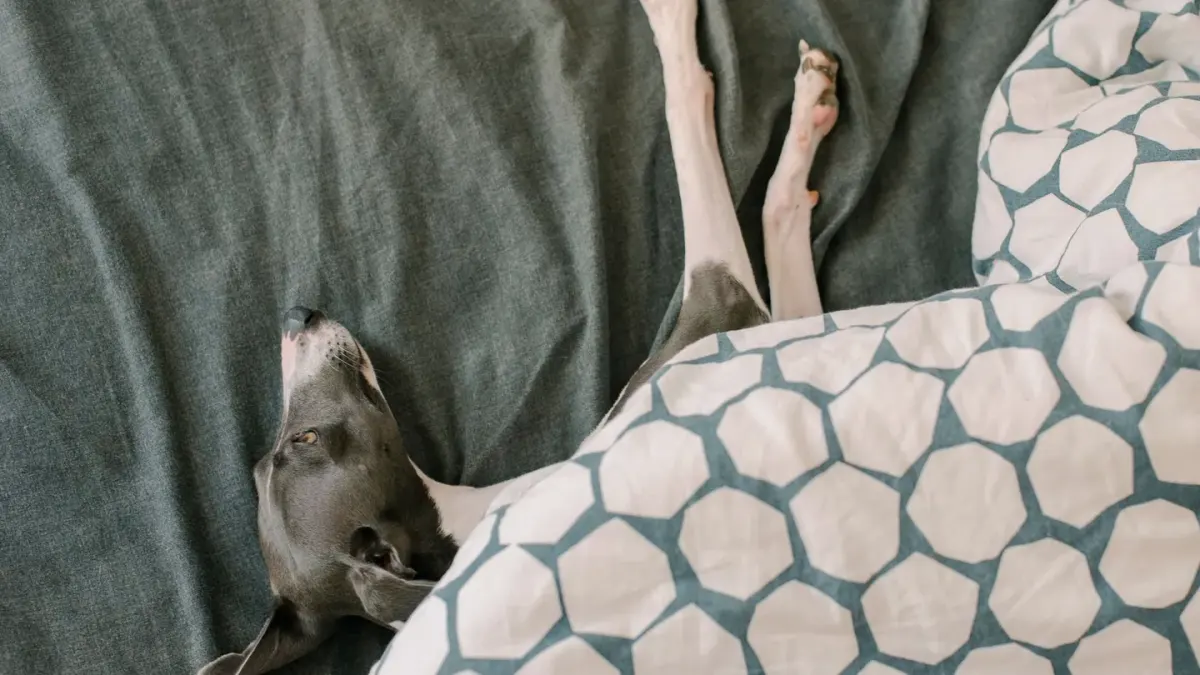
You notice it while you are sitting on the floor with him in the evening. Your 12-year-old shepherd mix used to spend ten minutes after dinner working over his paws and flanks, and now he starts, shifts his weight, and gives up after a few licks. In a home visit I watch for that exact moment, because the choice to stop is rarely laziness. It is usually a calculation about comfort, reach, and energy, made by a dog who has learned what movements leave him sore the next morning.
That is my starting premise, and I want to hold it up honestly. Most reduced self-grooming in older dogs traces back to the body getting harder to bend and the brain getting a little foggier, rather than skin disease alone. Coat odor or matting looks like a skin problem, yet the skin is often downstream of stiff joints, a painful mouth, added weight, or canine cognitive change. If you attend to the whole patient in its own home, the grooming change starts to make sense.
When Reaching The Usual Spots Gets Hard
For many seniors the mechanics change first. The spine does not flex as freely, the neck does not turn as far, and a hind leg with arthritis cannot hold a long scratch or lift for a groin wash. Cornell University College of Veterinary Medicine describes how age-related joint and neurologic conditions quietly reshape daily movement, and grooming is daily movement.
You can see this at home without any equipment. Watch whether your dog still curls to chew a hind paw, whether he balances on three legs to scratch an ear, and whether he rolls to one side to tend his belly. Dogs who lose those positions often lick only what is easy, usually the front paws and chest, and leave the rump and tailhead untended.
What stiffness looks like during grooming
Shortened sessions, frequent position changes, grunting on lying down, or skipping hind-end care point toward musculoskeletal discomfort. VCA Hospitals notes that arthritis in dogs shows up as lagging on walks, difficulty rising, and reluctance to move in ways that used to be routine, which maps closely to a dog who quits mid-groom.
A practical fix is to bring grooming within easy reach. Offer a thick orthopedic bed against a wall so he can lean while he licks, keep water and resting spots on one floor, and add a rug runner over slick floors between bed and door. Gentle daily motion helps more than one long weekend outing.
I visited a home where a nine-year-old cattle-dog type had stopped cleaning her hind feet after evening walks. Over 4 nights the owner counted only two brief attempts, both abandoned when the dog tried to lift her left hind leg. We moved her bed next to a couch arm she could brace against, trimmed the hair between her pads for traction, and split one long walk into two shorter loops with a rest day built in. She resumed licking her paws on the second evening, slowly and only while leaning, which told us reach and balance had been the barrier rather than interest.
When The Mouth, Nose, Or Brain Changes The Habit
Grooming also depends on a comfortable mouth and a clear head. A cracked tooth, sore gum, or nasal congestion can make sustained licking and chewing unpleasant. Cognitive change can blunt the sequence itself. The dog wanders to his usual spot, stands, then seems to forget what brought him there.
Look for added clues around meals and nights. Dropping kibble, chewing on one side, pawing at the muzzle, bad breath, or head shyness suggest oral pain worth an exam. Night restlessness, staring at corners, house-soiling in a previously clean dog, or less greeting behavior suggest cognitive shifts that also flatten self-care routines.
How to support licking and chewing comfort
Soften the mechanics while you sort the cause. Wipe paws with a warm damp cloth after walks so he does not have to do all the work, brush in short sessions with a soft pin brush, and keep nails short so toes do not splay. If licking seems compulsive rather than reduced, or if you see sores, swelling, or sudden odor, have your veterinarian examine skin, mouth, and joints together rather than treating the coat alone.
Weight belongs in this same picture. Added fat shortens reach around the ribs and belly and raises the effort of every position change. Keeping meals measured, using a slow feeder, and holding treats to training rewards supports mobility and makes self-grooming physically possible again. Supplements sometimes come up here, and I keep expectations honest and evidence-aware. A product may help support normal joint function alongside weight control and movement, yet no chew replaces pain assessment, dental care, and a home layout that respects an older body.
A different household showed me where the usual advice has to bend. Their 78-pound senior Lab could still reach his flanks on good days, but on damp mornings he would sniff his hind paw and lie back down without trying. Instead of pushing the standard brush-then-walk routine, the owner flipped the order on stiff days, letting him warm up with five minutes of slow indoor pacing and a warm towel on his hips before any grooming help. On those mornings he accepted a brief assisted wipe and finished one paw himself, while on warmer afternoons he groomed unprompted. The routine stayed the same in shape and changed in timing, fitted to the dog in front of us.
A Home Checklist You Can Run Tonight
Use this as a quiet observation session, not a test he has to pass.
Check reach first
Note which zones he still tends and which he skips. Front paws only, or full body. Can he curl, turn his neck both ways, and balance briefly. Film 60 seconds from the side if you plan to share it with your veterinarian.
Check mouth and senses
Offer a chew he has always liked and watch for side-chewing, dropping, or quitting early. Note appetite, sneezing, nasal discharge, and whether smell-driven interest seems duller.
Check rhythm and rest
Note sleep, night waking, and whether grooming happens at a certain time of day. Many seniors do better late morning after stiffness eases, and worse late evening when tired.
Check skin as the last step
Part the coat where he no longer reaches. Look for mats, dander, redness, or odor trapped under the surface. Clean gently, dry fully, and avoid cutting tight mats with scissors against skin.
Bring those notes to your veterinarian, along with medications, diet, and any recent weight change. Reduced grooming alone rarely diagnoses anything, yet paired with how he moves at home it helps your clinician sort joint pain from oral pain from cognitive change and set a plan that fits the dog you live with.
For related context, read What Blood Tests a Senior Dog Should Get Before Starting a Longevity Supplement.
For related context, read Best Supplements to Support a Senior Dog’s Immune System.
Frequently asked questions
Is it normal for an older dog to groom less?
A gradual slowdown can happen with age, but a clear drop often reflects stiffness, oral pain, weight gain, or cognitive change. Track what he skips and share video with your veterinarian.
Should I groom him more if he grooms himself less?
Yes, gently. Short brushing sessions, warm paw wipes, nail trims, and mat checks keep skin healthy while you address the underlying cause.
When should I call the vet about reduced grooming?
Call promptly for sudden change, odor, sores, swelling, limping, mouth pain, or behavior shifts like night waking and house-soiling. Those signs point beyond normal aging.
Sources
- Riney Canine Health Center — Cornell University College of Veterinary Medicine
- Arthritis in Dogs — VCA Hospitals